Ash from a garden fireplace: how to put out the fire and where to use the ash
You don’t put out a fire in a clay chiminea with water: towards the end of the evening you stop adding logs, let it burn down to ash and let it cool on its own, by the next day. The ash comes out only when it is completely cold, with a small shovel, into a metal container. Ash left from clean wood is good for the garden in moderation: in compost, for tomatoes and on acidic soils, but not for acid-loving plants.
Ash is the part of the evening people think about least, yet it matters both for safety and for looking after the clay. Below: how to end the fire, when and how to clear out the ash, what to do with the sand in the bottom and how to use the ash in the garden.
How do you put out the fire in a clay chiminea?
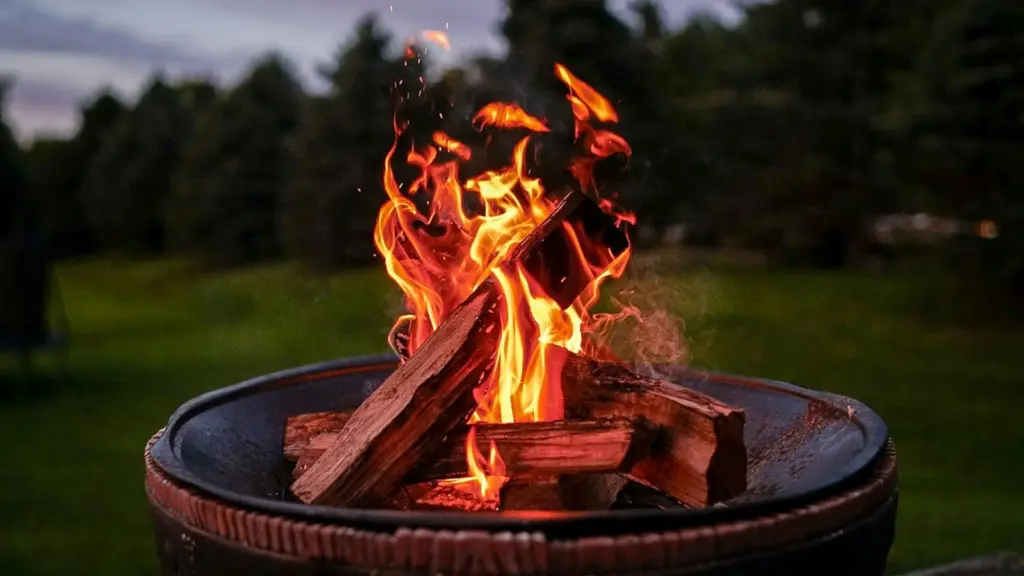
The safest way is to let it die down by itself. An hour or two before you go indoors, stop adding wood. What is left burns down to ash and small embers, and the chiminea cools naturally.
- No water. Water poured over hot clay suddenly cools only part of the wall and can open up a crack. It is one of the most common mistakes.
- Any remaining embers can be covered with the sand from the bottom of the bowl, stirring it gently with a small metal shovel. Starved of air, the embers go out faster.
- Don’t leave the fire while there are still flames. Especially if it is windy.
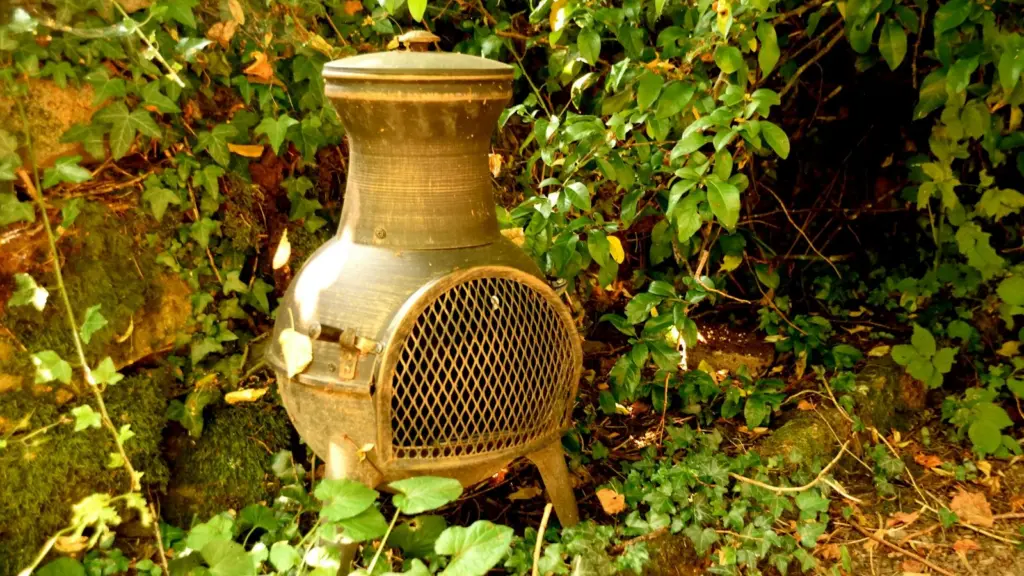
- The lid goes on the chimney only once the chiminea is completely cold.
And one rule that comes before all the others: in an emergency, when the fire escapes the bowl or something nearby has caught light, people come before ceramics. Then you use water or the fire extinguisher without a thought for the clay.
When and how do you clear out the ash?
The next day, when the bowl is cold to the touch and there is no warm spot left in the ash. Embers covered by ash can stay hot for many hours, even if everything looks out on the surface.
- Put on gloves. Wood ash is fine and slightly caustic on the skin.
- Scoop out the ash with a small shovel, slowly, without scratching the inside of the bowl.
- Put it in a metal container with a lid, never in plastic or cardboard, or straight into the wheelie bin.
- Leave the metal container outdoors, on a surface that doesn’t burn, away from walls and the log pile, for another day or two.
What do you do with the sand in the bottom?
The layer of sand, about 10 cm deep, stays in the chiminea: the fire is built on it so that the embers don’t sit directly on the clay. If it has become heavily mixed with ash or got wet, sieve it or replace it with dry sand. In winter, if it is damp, empty it out along with the ash and put in dry sand before the first fire in spring. The rest of the care routine is in our guide on how to look after a clay garden fireplace.
Is wood ash good for the garden?
Yes, in moderation. Wood ash contains potassium and calcium and makes soil less acidic. That is where both its uses and its limits come from:
- In compost: sprinkled in thin layers among the green waste. Not in a heap in one spot.
- On acidic soils: it helps. On soils that are already alkaline, there is no need for it. If you don’t know what soil you have, a cheap pH test from the garden centre will tell you quickly.
- A little, and not often: a thin layer, scattered evenly and lightly worked into the soil, not a thick layer in the same place year after year.
- Dry, not wet: keep it in a covered container; rain washes out some of its potassium.
Can you put ash on tomatoes, peppers and cucumbers?
Many gardeners add a little to the soil, at planting time or during the season, for potassium and calcium. The rule is the same: small amounts, worked into the soil, not on the leaves and not directly against the stem. If your soil is already alkaline, the ash brings nothing more of use.
Where should you not put ash?
- On plants that love acidic soil: blueberries, azaleas, rhododendrons, and hydrangeas you want to stay blue.
- On potatoes, where less acidic soil encourages common scab on the tubers.
- Directly onto freshly sown seeds and young seedlings.
- Never ash from painted, varnished or treated wood, from chipboard, MDF or plywood, from briquettes with additives or from rubbish. These leave behind substances you don’t want in your garden. That is why what you burn matters too: see our guide on what to burn in a garden fireplace.
And charcoal ash?
Ash from a small amount of natural lumpwood charcoal, without additives, can be mixed with wood ash. Ash from briquettes with binders or quick-light additives does not go on the garden: throw it away cold, in the household rubbish, in a sealed bag.
Our chiminea in brief
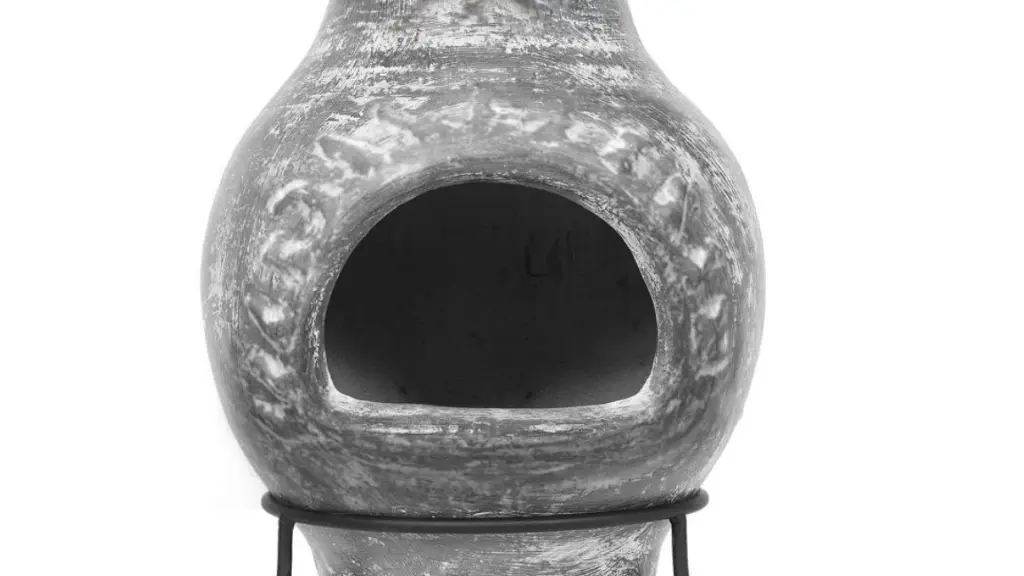
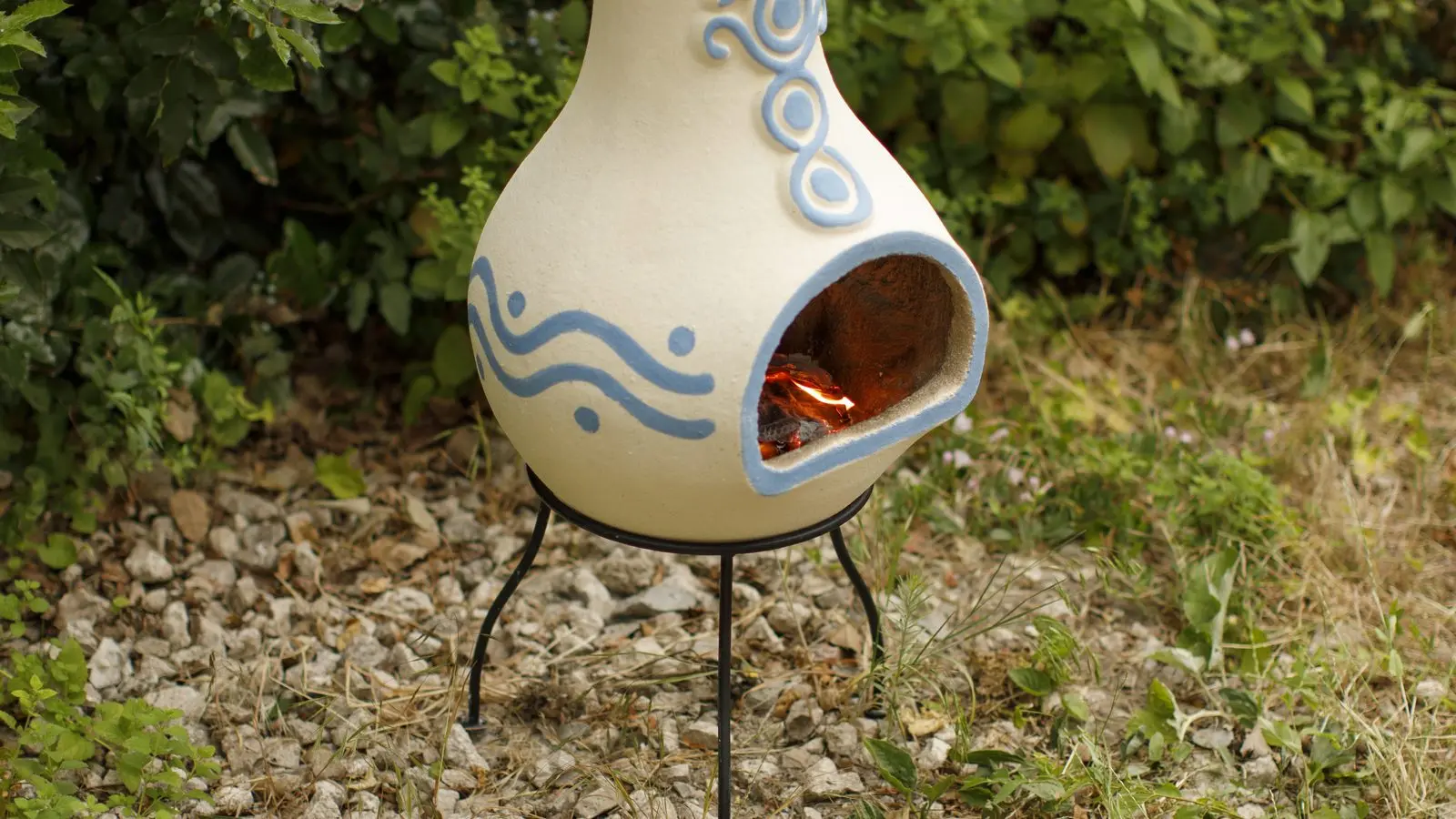
Sparkle Stone chimineas are handmade from 100% natural clay, withstand 500-600 °C, stand 87 cm tall with the three-legged stand and come with a protective lid. The fire is built on the sand layer in the wide bowl, and the ash comes out easily through the mouth. See our clay garden fireplaces or go straight to the model with red ornaments. The current price is on the product page. For the start of the evening, read how to light a fire in a garden fireplace.
Can I put out the fire in a clay chiminea with water?
Not as a rule: water on hot clay can crack the wall. Let the fire burn down to ash. Only in an emergency do you use water, because people come before ceramics.
How long does ash stay hot?
Embers covered by ash can stay hot for many hours. Clear out the ash the next day, only when the bowl is cold, and keep it for another day or two in a metal container, outdoors.
Can you put ash on tomatoes?
Yes, a little, worked into the soil, for potassium and calcium, if the soil isn’t already alkaline. Not on the leaves and not in a thick layer.
Is charcoal ash good for the garden?
Only ash from natural lumpwood charcoal, without additives, and only a little. Ash from briquettes with binders or additives does not go on the garden.