A wood-burning fireplace on an enclosed patio: is it possible? The honest answer
No. A wood-burning garden fireplace, such as a clay chiminea, must not be used on an enclosed patio, nor under the roof of a covered terrace, a gazebo or a pergola. A wood fire produces smoke and carbon monoxide, and where the air cannot move freely, they build up. The fire moves outside, onto paving, 2-3 m from the house, and the enclosed patio is heated with an appliance made for enclosed spaces.
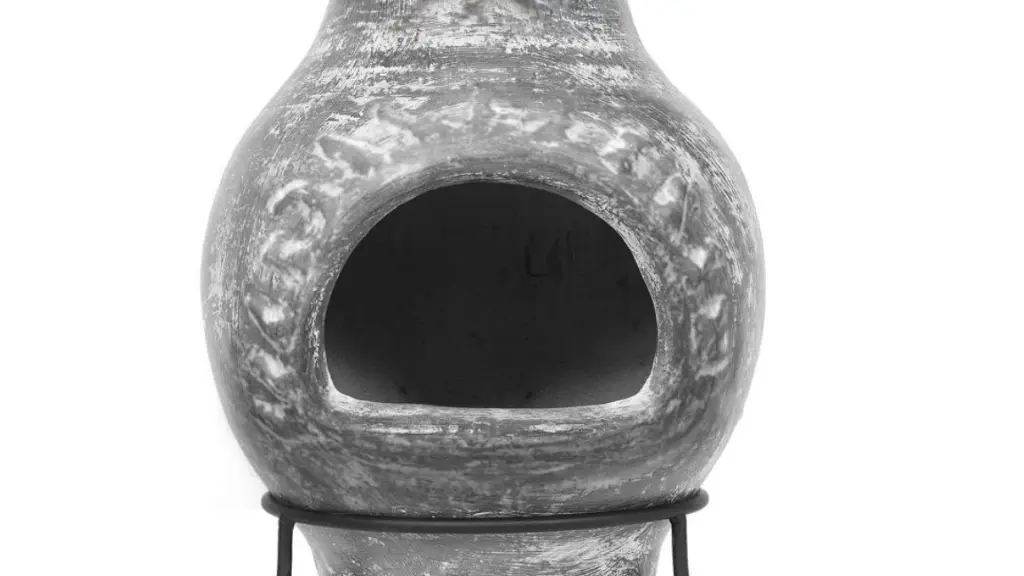
The question comes up a lot, especially in autumn, when the terrace gets closed in with glass or plastic sheeting and it would be lovely to keep the fire in there too. Our answer is the same for our own chimineas: we sell them for outdoor use, and the rule we give customers is “open sky above the chimney”. Below we explain why, and what you can do instead.
Why doesn’t a wood-burning fireplace work in an enclosed space?
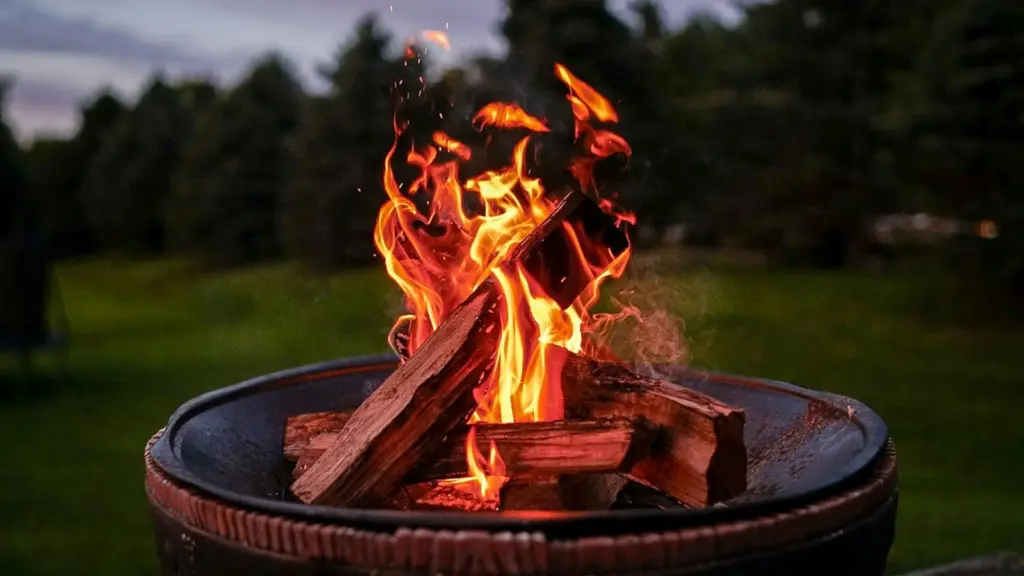
A garden fireplace is an enclosed fire with a chimney: the fire burns in the belly of the bowl, air comes in through the mouth at the front and the chimney draws the smoke upwards. All of this depends on the smoke having somewhere to go above the chimney. On an enclosed patio, it doesn’t.
- The smoke collects under the ceiling, slowly sinks and ends up in the eyes and lungs of everyone around. On an open terrace the wind carries it off; in an enclosed space it stays.
- Carbon monoxide is produced whenever wood burns, especially when the fire smoulders. It has no smell and cannot be seen. In an enclosed space its concentration rises without you noticing, and the first signs, headache, dizziness and nausea, are easily mistaken for tiredness.
- The heat and sparks from the chimney go straight into the ceiling, the plastic sheeting, the timber cladding or the beams. The chimney of a garden fireplace is not a flue that is connected, insulated and taken out through the roof.
What if the patio is only covered, not enclosed?
Still not under the roof. Even with open sides, the heat and smoke coming out of the chimney stop at the ceiling, and eaves or a beam above the chimney is exactly the situation we rule out in our placement guide. The same goes for a gazebo: next to it is fine, under its roof is not. A pergola with beams or a canopy overhead falls into the same category.
What you can do: set the chiminea out from under the roof, on a base of concrete, stone or brick paving, with the chairs in front of the mouth. The table and daytime seating stay under cover, and in the evening you move a few steps further out. All the distances and surfaces are in our guide to placing a garden fireplace.
An enclosed patio with a fireplace: what safe options are there?
There are some, but it is a different thing: an indoor fireplace, installed like a stove, with a flue that is connected, insulated and taken out through the roof, built and inspected by a specialist. That is building work, with its own regulations, not an object you move onto the patio. A garden fireplace in clay or metal does not stand in for that kind of fireplace, however well its chimney draws outdoors.
In short, the options for an enclosed patio, from the simplest to the most complicated:
- An electric infrared heater, wall- or ceiling-mounted: it burns nothing, so it makes neither smoke nor carbon monoxide.
- A flame appliance that its manufacturer declares suitable for enclosed spaces, for example some bioethanol fireplaces, used exactly with the ventilation and clearances the manufacturer requires.
- An indoor fireplace or stove with a flue that is connected and taken out through the roof, installed and inspected by a specialist: the only option for a wood fire under a roof.
- The fire outside, next to the patio: the garden fireplace on paving, out from under the roof, a few steps from the door.
The differences between gas, bioethanol and wood fires, for the outdoor options, are in our guide to gas, bioethanol or wood-burning garden fireplaces.
How do you heat an enclosed patio?
With appliances made for enclosed spaces, used exactly as their manufacturer says. A few options, briefly:
- Electric infrared heaters, wall- or ceiling-mounted, are the simplest option: they burn nothing, so they make no smoke and no carbon monoxide. Just check that your electrical installation can handle them.
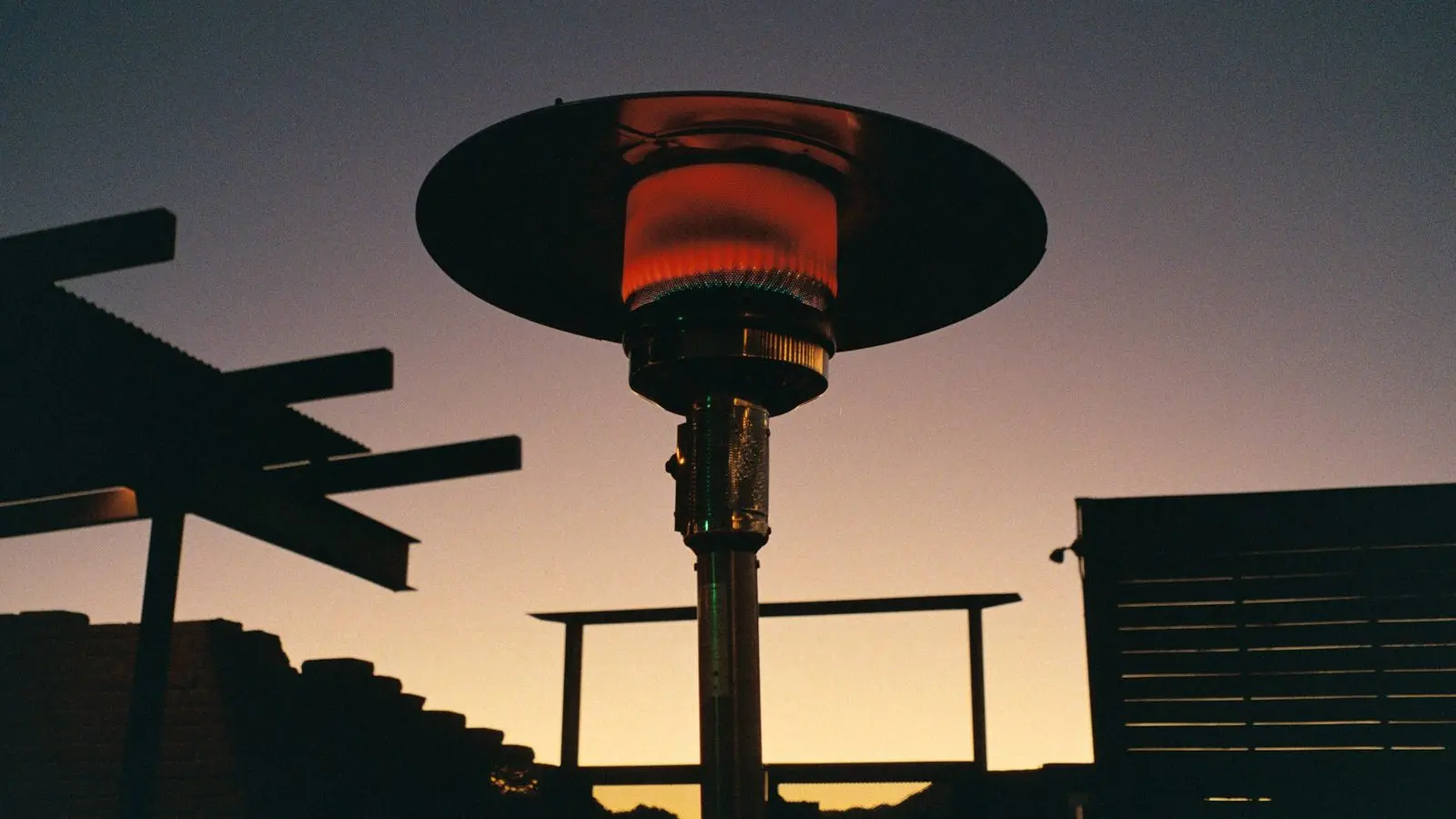
- Gas patio heaters of the mushroom type are, as a rule, designed for open, well-ventilated terraces. In an enclosed space, only use an appliance that the manufacturer declares suitable for it, with the ventilation it requires.
- An indoor fireplace or stove, with a flue built as you would for a house, if you want a real fire in the enclosed space. Here a specialist decides, not a guide on the internet.
Whatever the combustion appliance, a carbon monoxide detector is a small investment for the whole family’s peace of mind. And for open terraces, we have compared the patio heater, the fire pit and the garden fireplace in our guide on how to heat your patio in the evening.
So where do you put the garden fireplace?
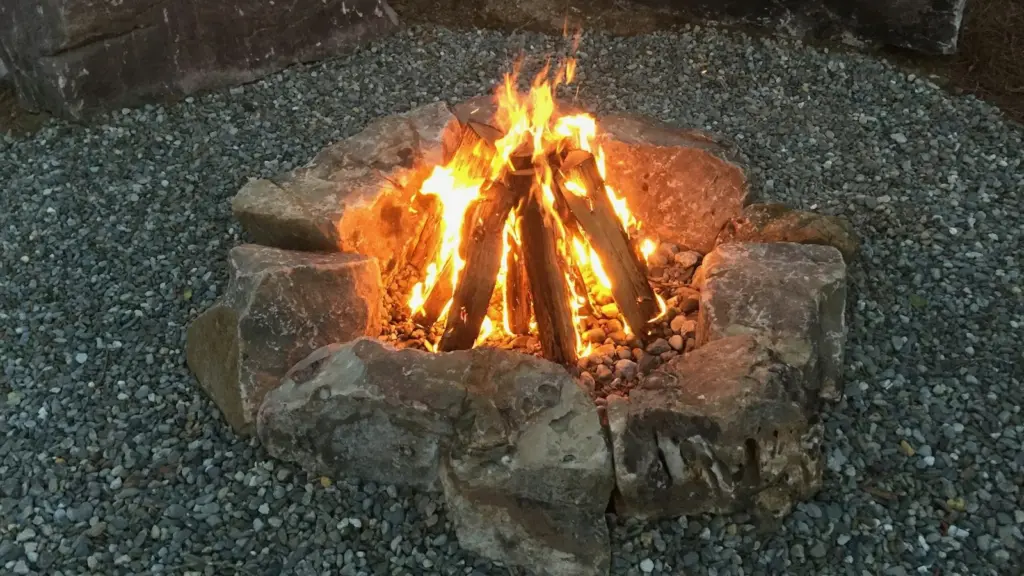
Outside, where the fire has sky above it: on the open terrace, in the yard or in the garden, on concrete, stone or brick paving, 2-3 m from walls, wooden fences and upholstered furniture. On a timber deck, on a protective area of slabs measuring roughly 1 x 1.2 m. With its back to the wind, the chimney draws better and the smoke doesn’t reach the windows. How to arrange the chairs, lighting and logs around it: setting up a patio with a garden fireplace.
Our chimineas are handmade from 100% natural clay, stand 87 cm tall together with the three-legged stand and weigh between 17.2 and 19.9 kg, so they are easy to move between the covered terrace, where they stand by day, and the evening fire spot. Just one caution: move them only when they are completely cold, lifting them by the body, from the base, never by the chimney. See our clay garden fireplaces, with blue ornaments or red. The current price is on the product page.
Can I use the chiminea on an enclosed patio if I open the windows?
No. With the windows open, the roof is still above the chimney, and the smoke and heat collect under it. Take the chiminea outside, onto paving, out from under the roof.
What about under a gazebo or a pergola?
Next to a gazebo, yes; under its roof, no. The same with a pergola: nothing above the chimney, no beams, no canopy, no branches.
What heating works on an enclosed patio?
Electric infrared heaters, which burn nothing, or appliances that the manufacturer declares suitable for enclosed spaces. A real fire requires an indoor fireplace with a flue built by a specialist.
How far from the patio should I put the chiminea?
2-3 m from walls, wooden fences and upholstered furniture, with open sky above the chimney and on a base that doesn’t burn: concrete, stone or brick paving.
Can I have an enclosed patio with a wood-burning fireplace?
Yes, but only with an indoor fireplace, with a flue built as for a house and inspected by a specialist. A garden fireplace, in clay or metal, does not take its place.