What to burn in a garden chiminea: wood, charcoal, smoke and cooking
In a clay garden chiminea, burn natural, well-seasoned wood, preferably hardwood: beech, hornbeam, oak, acacia (black locust) or fruitwood, cut into pieces that fit entirely inside the bowl. Don’t burn painted or treated wood, plastic or rubbish, and don’t use lighter fluids. Charcoal is fine, in moderation.
With a clay fireplace, the fuel matters more than with a metal one. It decides how much smoke the fire makes, how hot it burns and, in the long run, how well the ceramic holds up. The rules below apply to any outdoor clay fireplace, whether you call it a hearth, a Mexican fireplace or a chiminea.
What is the best wood for a clay chiminea?
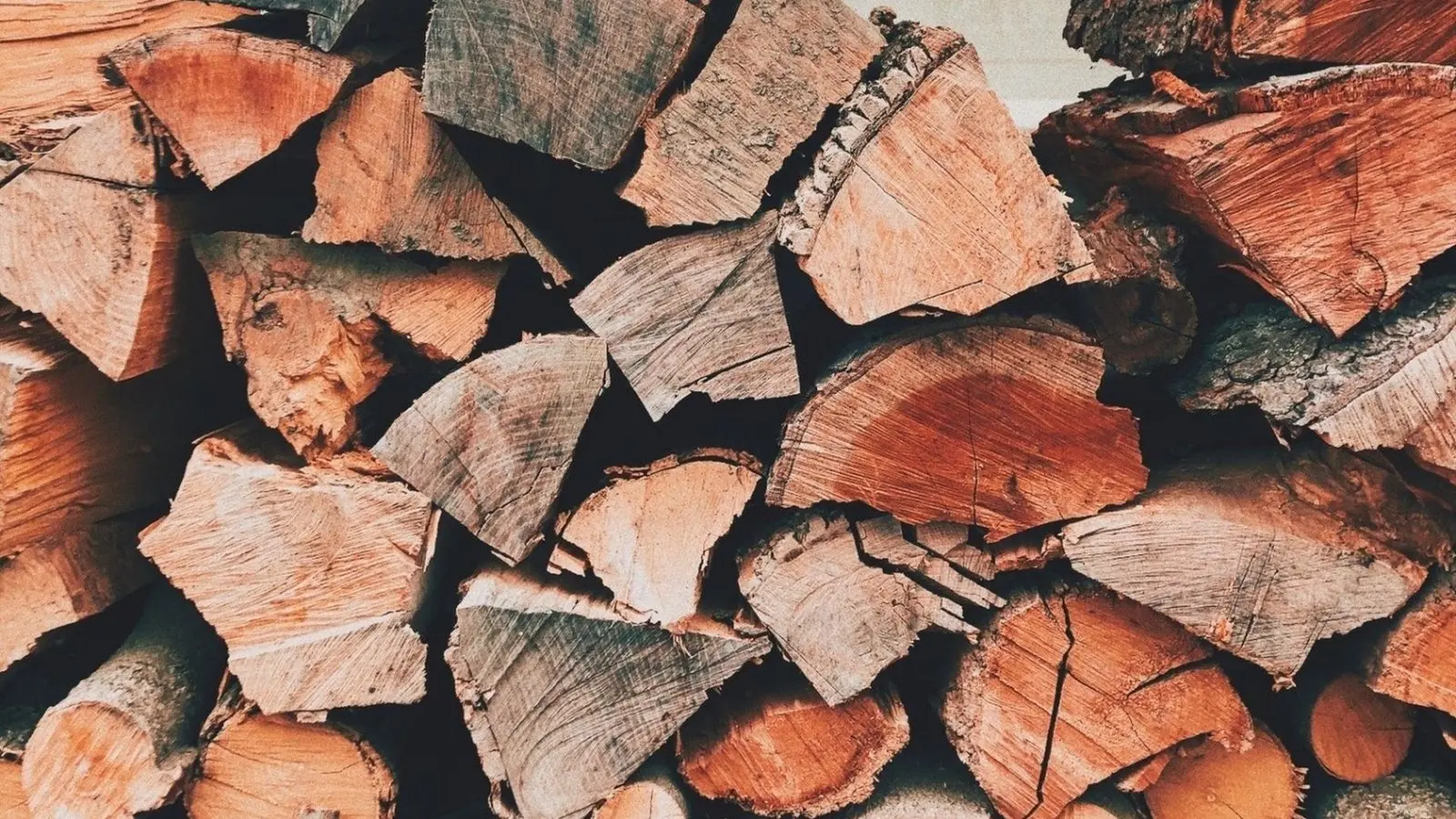
The best is hardwood that has been left to dry for at least one season. It burns longer and more calmly, makes good embers and throws fewer sparks than softwood.
- Beech, hornbeam, oak, ash: classic firewood, with a steady flame.
- Acacia: dense and easy to find in many areas; it burns hot, so add it in small amounts.
- Apple, cherry, sour cherry, plum: fruitwood with a pleasant scent, ideal for evenings when you sit close to the fire.
Dry wood is easy to recognise: it is lighter than it looks, has cracks at the ends, the bark comes away without effort, and two pieces knocked together sound sharp, not dull. Freshly cut wood hisses, is hard to light and makes a lot of smoke.
Size matters as much as the species: split pieces, not too thick, short enough to sit entirely inside the belly of the bowl without sticking out of the fire mouth.
Good firewood: the species at a glance
| Wood | How it burns | In a clay chiminea |
|---|---|---|
| Beech, hornbeam, ash | steadily, with good embers | the basic choice |
| Oak | long and hot, if well seasoned | good, in small pieces |
| Acacia | very hot | a little at a time |
| Apple, cherry, sour cherry, plum | with a pleasant scent | for evenings by the fire |
| Fir, spruce, pine | fast, with crackles and sparks | only as kindling |
| Poplar, lime, willow | fast, with few embers | for lighting |
| Green, freshly cut wood | poorly, smouldering, with lots of smoke | no |
Good firewood is, above all, dry wood. How to dry it and how long it takes: how to dry and store firewood.
What should you never burn in a clay fireplace?
- Painted, varnished, impregnated or treated wood, including old furniture, chipboard, MDF and plywood.
- Pallets of unknown origin, because some are chemically treated.
- Plastic, packaging, household rubbish, rubber or textiles.
- Petrol, methylated spirits, lighter fluid or other accelerants: they ignite suddenly and cause exactly the violent heating that clay cannot take.
- Large amounts of paper or cardboard, which can rise up the chimney while still burning.
Softwoods (fir, spruce, pine) aren’t forbidden, but they crackle, throw sparks and leave deposits. Use them only as kindling, to get the fire going.
Can you use charcoal?
Yes. The wide bowl of the chiminea takes both wood and charcoal. Lumpwood charcoal, however, gives a concentrated heat, so use a small amount, spread over the sand layer, not piled up to the fire mouth. Briquettes with additives for quick lighting are best avoided.
How do you light the fire so it makes less smoke?
A garden chiminea burns wood, so it makes smoke: there is no such thing as a completely smoke-free wood-burning fireplace. The difference is that the chimney draws the smoke upwards, not into your face, and a well-built fire smokes very little.
- Start with a little paper and thin kindling, then add two or three small pieces.
- Leave space between the logs so air can get in through the fire mouth.
- Add wood a little at a time, as it burns, rather than filling the bowl from the start.
- The flame should stay inside; if it comes out of the mouth or the chimney, the fire is too big.
If the chiminea is new, the first fires are the curing fires, small and gradually bigger: see the first-firing guide. Location matters too, for smoke and for safety: read where to place your garden chiminea.
Can you cook on a clay garden chiminea?
Yes, simple things over the embers: sausages or marshmallows on a stick, chestnuts, toast, potatoes wrapped in foil and placed next to the embers. The chiminea is designed first and foremost as a fireplace for warmth and atmosphere, not as a barbecue, and a few rules keep the ceramic in good shape:
- Cook over embers, not over a big flame.
- Avoid lots of fat dripping into the bowl.
- Don’t place heavy pots or pans on the fire mouth or on the chimney.
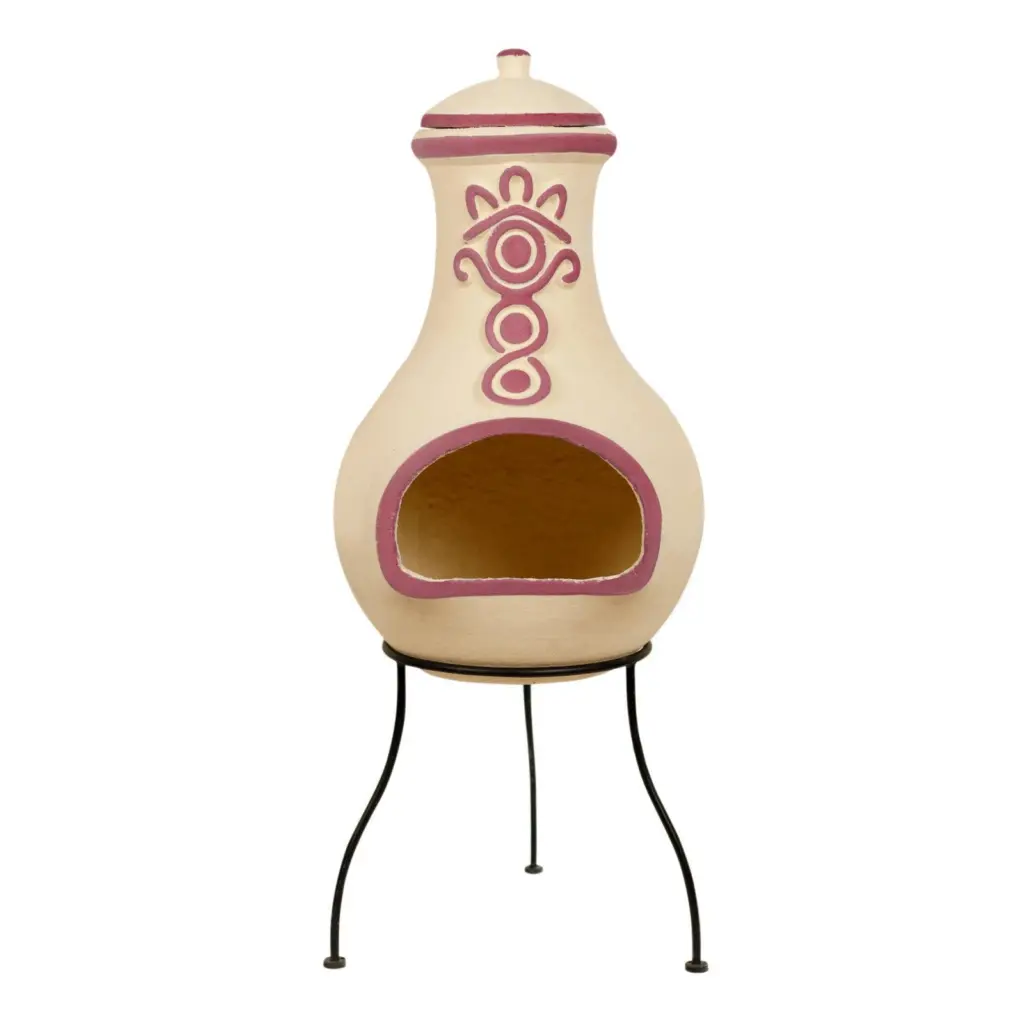
If you’d like to see the shape of the bowl, the fire mouth and the chimney, all the details are on the page for the 87 cm clay garden chiminea.
Can I burn compressed sawdust briquettes?
Pressed-wood briquettes with no binders and no additives can be used in moderation, because they burn long and hot. Add one or two to a fire that is already going.
Why does my chiminea make so much smoke?
Almost always because of damp wood or too many logs added at once. Use dry wood and smaller pieces, and let the air circulate.
Can I burn leaves or green branches from the garden?
It’s not a good idea: they make a lot of smoke, burn badly and bother the neighbours. Dry branches, snapped into small pieces, do make good kindling, though.