How to light a fire in a clay chiminea, step by step
To light a fire in a clay chiminea, start with a dry bowl, the layer of sand in the bottom and the old ash cleared out. Lay two or three small, dry logs on the sand, put kindling on top of them and finish with paper or a natural firelighter. Light it from the top, let the fire work its own way down and add wood a little at a time, so the flames stay inside the bowl.
This is called the “top-down” method, and it suits a garden fireplace well: it usually smokes less as it gets going, it needs less poking and it stops you filling the bowl right from the start. Below are the steps in the order that matters, followed by the mistakes that cause smoke or put the clay under strain.
One thing before anything else: if your chiminea is new, the first fires are curing fires, small and gradually bigger, with a full cool-down in between. Those steps are in our guide to the first firing of a clay chiminea. What follows here is for ordinary evenings, once curing is done.
What do you prepare before lighting?
Five minutes of preparation saves you from most start-up problems.
- A dry chiminea. If rain has got down the chimney or it has stood uncovered, give it a few days to dry out. Damp clay should not be heated quickly.
- The sand layer in place, about 10 cm deep, in the bottom of the bowl. The fire is built on the sand, not directly on the clay. Clear out last time’s ash only if it is completely cold.
- The protective lid off the chimney. It stays on the chimney while the chiminea is cold and unused, to keep the rain out.
- The right spot: concrete, stone or brick paving, 2-3 m away from walls, wooden fences and upholstered furniture, with nothing above the chimney. With its back to the prevailing wind, the chimney draws better.
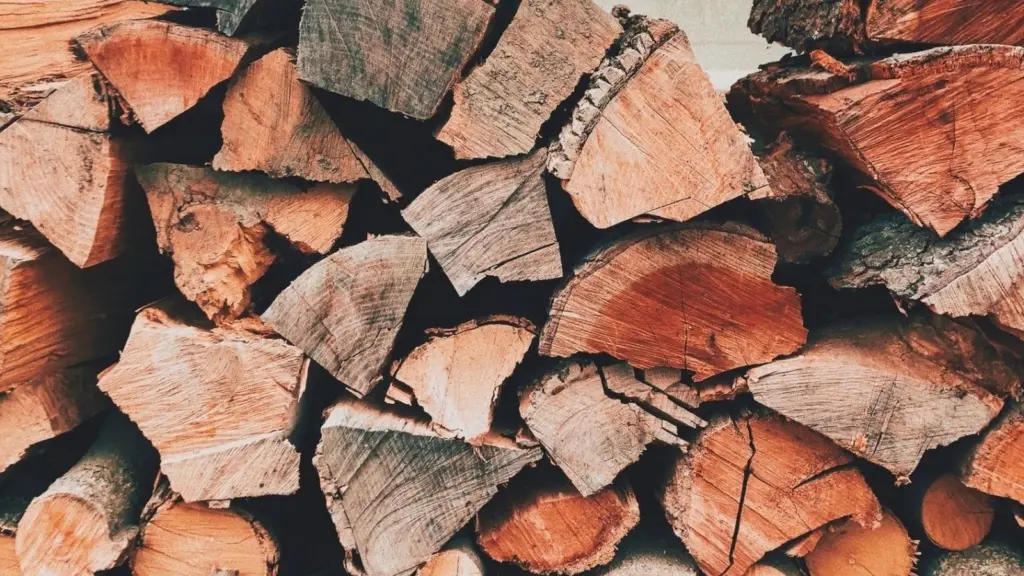
- Dry hardwood logs, split into pieces that fit whole inside the bowl, plus a handful of thin kindling. Softwoods are only good as kindling.
- Within reach: a small metal shovel, gloves and a bucket of sand or dry soil, just in case.
How to light the fire top-down, step by step
- The base. On the sand, lay two or three small split logs side by side, a finger’s width apart. Point them towards the mouth of the chiminea, so the air coming in at the front can flow between them.
- The kindling. Over the logs, lay a layer of thin kindling crosswise, then another, thinner one.
- The firelighter. Right on top, a handful of loosely crumpled paper or a solid, natural firelighter. Go easy on the paper: too much of it lifts off burning and goes up the chimney.
- Lighting. Light the paper from the front, through the mouth. The flame catches the kindling, which in turn lights the logs below.
- Patience. Don’t move the logs and don’t block the mouth. Let the air come in at the front; the chimney draws the smoke upwards.
- The first new logs. Once the bottom layer is burning steadily and forming embers, add one or two pieces. No more than that.
Why top-down and not with paper underneath?
Both methods work. With the classic one, paper at the bottom and logs on top, the pile often collapses as the paper burns away and the fire has to be rebuilt. With top-down lighting, the flame works its way down gradually: the kindling warms the logs underneath before lighting them, so the fire starts more gently and, usually, with less smoke. For a clay bowl, which cannot cope with sudden heating, a gentle start is exactly what you want.
How much wood, and how big should the fire be?
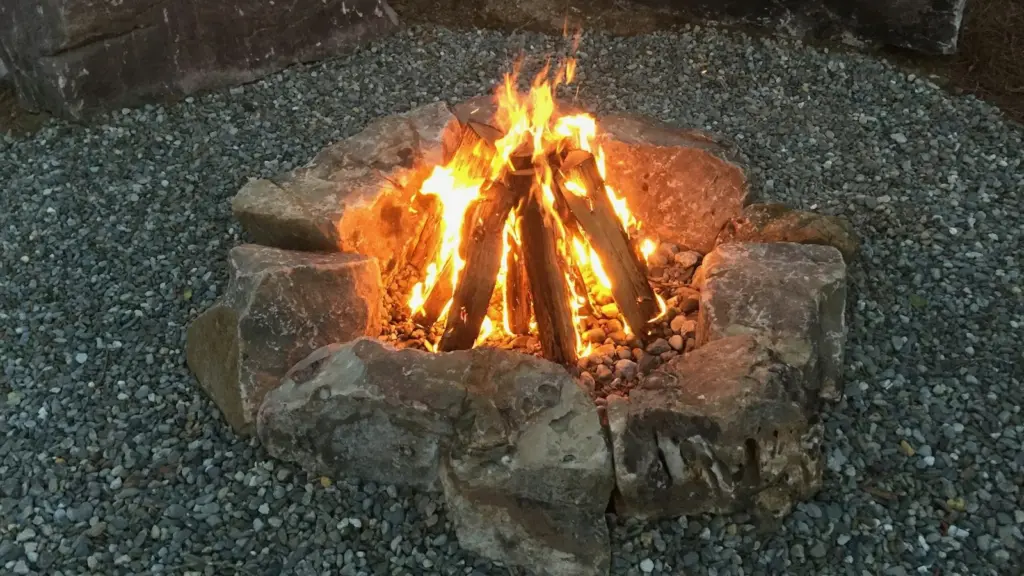
Not much, and a small fire. The simple rule: the flames stay inside the bowl. If they come out of the mouth or the chimney, the fire is too big. Add wood a little at a time, as it burns down, and don’t fill the bowl at the start.
Fired clay withstands 500-600 °C, but what damages it is not a long evening, it is sudden change: too much wood at once is one of the usual causes of serious cracks. Charcoal is fine in small amounts, spread over the sand layer. Which woods burn best and what you should never burn are covered in our guide to what to burn in a garden fireplace.
Why does it smoke when you light it, and how do you reduce it?
A wood fire makes smoke, especially in the first few minutes. When it smokes a lot, the cause is almost always one of these:
- the wood is damp or freshly cut: it hisses, is slow to catch and gives off smoke;
- you have put in too many logs at once, or packed them too tightly, and the air can no longer circulate;
- there is too much paper, and it rises up burning instead of lighting the kindling;
- the bowl is still damp from rain;
- the wind is blowing straight into the mouth. Turn the chiminea with its back to the wind, once it is completely cold.
What do you do at the end of the evening?
Towards the end, stop adding wood and let it burn down completely, to ash. The chiminea cools on its own, by the next day. Never pour water over hot clay: it suddenly cools only part of the wall and can open up a crack. Put the lid back on the chimney only once the bowl is cold. Everything else, from ash to winter storage, is in our clay chiminea care guide.
Our chiminea in brief
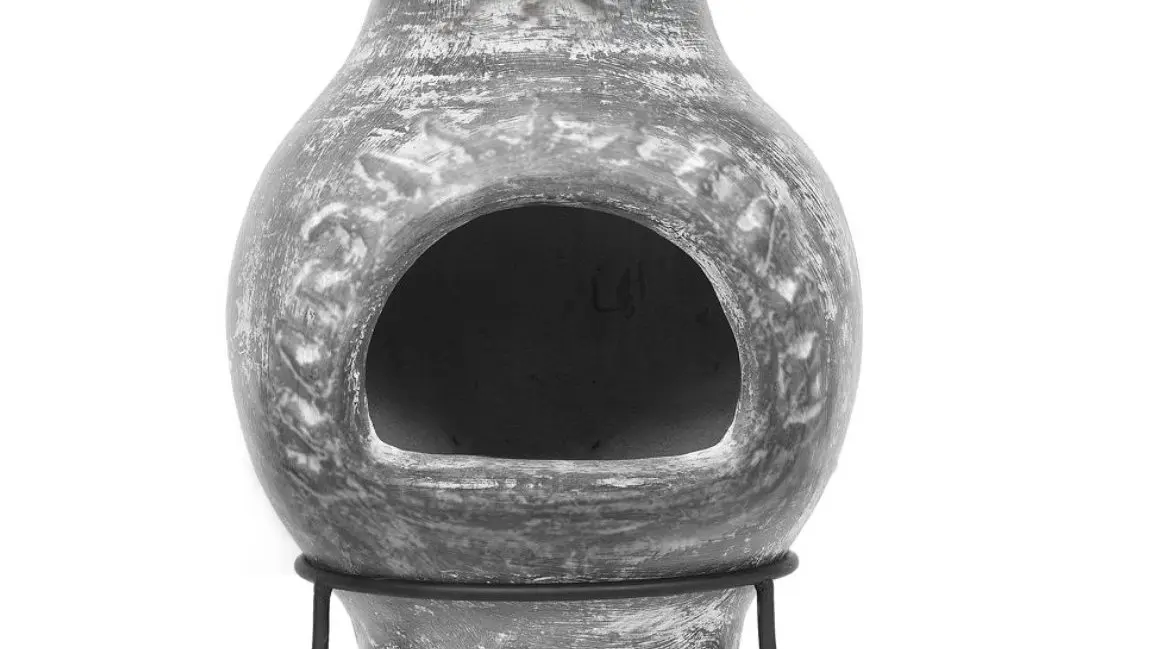
Sparkle Stone chimineas are handmade from 100% natural clay, stand 87 cm tall together with the three-legged stand, weigh between 17.2 and 19.9 kg and come with a protective lid. The wide mouth takes logs at bowl level, and the fire is built on the sand layer, exactly as described above. See our clay garden fireplaces or go straight to the model with red ornaments. The current price is on the product page.
Can I use lighter fluid in a clay chiminea?
No. Petrol, methylated spirit and lighter fluids start the fire abruptly, which is exactly the violent heating that clay cannot take. Use paper, kindling or a solid, natural firelighter.
Do I need to take the lid off before lighting?
Yes. The lid sits on the chimney only while the chiminea is cold and unused, to keep the rain out. Put it back once the bowl has cooled completely.
Can I light a fire after rain?
Only once the chiminea has dried out, usually after a few days without rain. Start with a small fire and build it up gradually.
Can I start the fire with charcoal?
Start with kindling and wood, then you can add a little charcoal, spread over the sand. Briquettes with additives for quick lighting are best avoided.