Firewood: how to dry it and store it for your garden fireplace
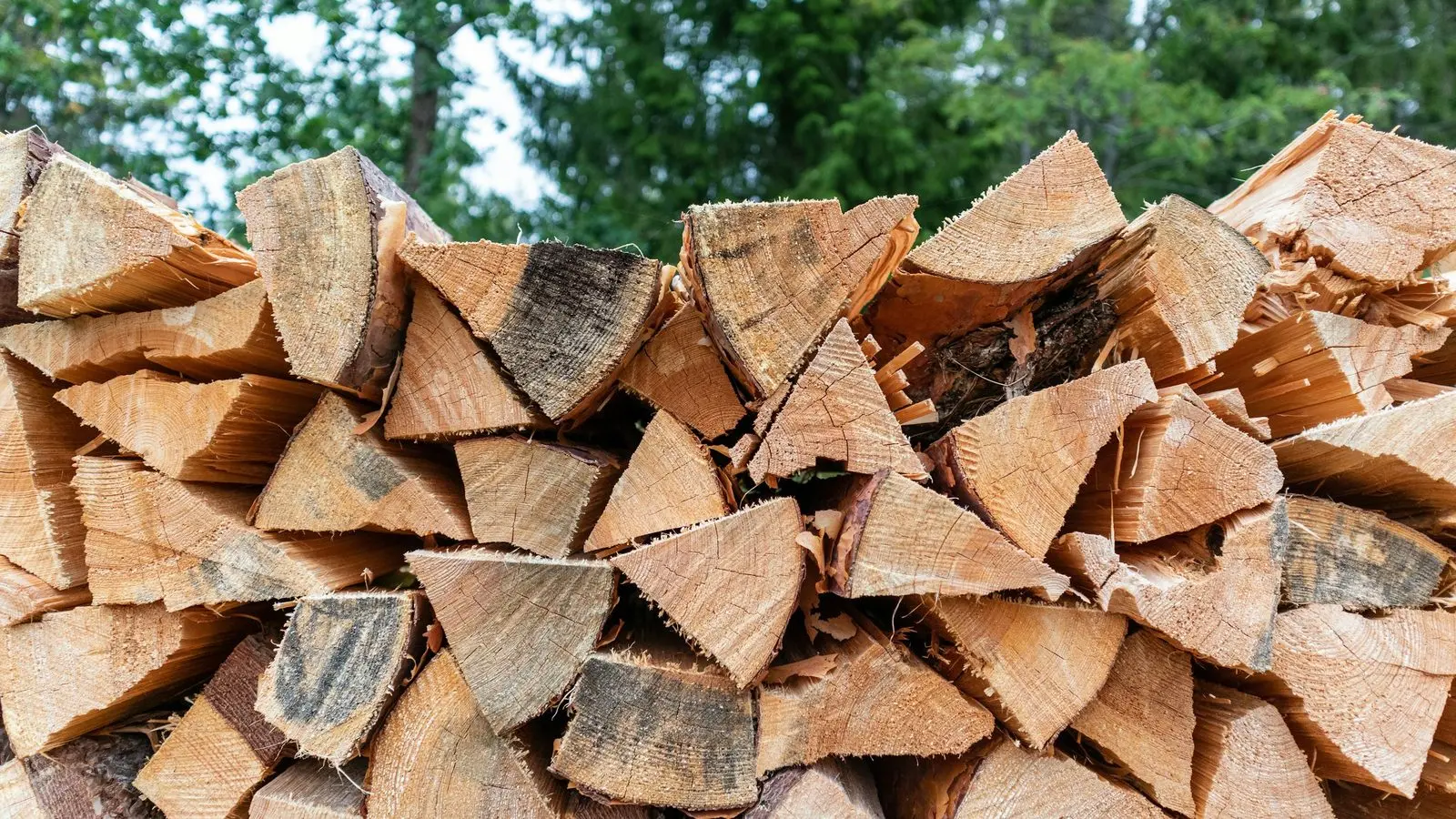
Firewood dries when it is split, stacked on a rack raised off the ground, covered only on top and left open at the sides, in the sun and the wind. As a rule it needs at least one warm season, and dense woods such as oak and acacia take longer. For a clay garden fireplace this matters: only well-seasoned wood burns cleanly, with a steady flame and little smoke.
In our guide on what to burn, we covered which woods are good for the fire. This is the part that comes before: how wood becomes dry, and where you keep it until the evening, in the garden or on the patio.
Why does dry wood matter so much?
Freshly cut wood holds a lot of water. On the fire, part of the heat goes into evaporating it: the wood hisses, is slow to catch, smoulders and gives off a lot of smoke. In a garden fireplace that means smoke in the eyes of everyone in their chairs, deposits in the chimney and the temptation to pile on even more wood to “get it going”, which is exactly the oversized fire that clay doesn’t like. Dry wood catches easily, burns hotter and more steadily and leaves less ash.
How do you dry firewood?
- Split it from the start. A whole log dries very slowly, because the water escapes mainly through the ends and the split faces. For a garden fireplace, split it into suitable pieces: short enough to fit whole inside the bowl without sticking out of the mouth.
- Raise the stack off the ground, on a rack, on beams or on pallets. Wood laid directly on the soil draws up moisture and goes mouldy at the base.
- Let it breathe. Stack it with small gaps between the pieces, split faces towards the air, and keep the stack off any wall.
- Cover the top only. Eaves, a shed roof or a tarpaulin laid over the top, so that rain and snow don’t fall directly on the logs. The sides stay open.
- Sun and wind. The best spot is sunny and exposed to the wind. A shady, sheltered corner dries wood much more slowly.
How long does firewood take to dry?
It depends on the species, the thickness of the pieces and the spot, so there is no exact figure. As a guide: split, well-stacked wood needs at least one warm season. Dense woods such as oak and acacia usually need longer, and so do thick pieces. If you are cutting wood for your garden fireplace now, think of next year’s evenings, not next week’s.
An inexpensive wood moisture meter gives you the exact answer: as a general guide, wood is ready to burn once its moisture content drops below about 20%. Measure on a freshly split face, not on the bark.
Rough guide times, for wood that is split, stacked on a rack and covered only on top. The moisture meter has the final say:
| Wood | Approximate drying time |
|---|---|
| Fir, spruce, pine, poplar, lime, willow | about 6-12 months |
| Beech, hornbeam, ash, fruit trees | about a year |
| Oak, acacia | about 1.5-2 years |
How do you tell if wood is dry?
- it is lighter than it looks at first sight;
- it has fine cracks at the ends;
- the bark comes away without effort;
- two pieces knocked together make a sharp, hollow sound, not a dull thud;
- on the fire it doesn’t hiss or foam at the ends.
Where do you store firewood outdoors?
The most common options, from simple to complete:
- An outdoor log rack or metal frame, with a roof or a tarpaulin over the top. It takes up little room and keeps the stack straight.
- A lean-to or a log store open on one side, with a raised floor or pallets. It is the right solution for large quantities.
- A house wall under the eaves works for a small stack, but leave an air gap between the logs and the wall and keep the stack away from windows and doors. Firewood harbours insects, and you don’t want them next to the house.
- A crate or a basket for one evening’s logs, on the patio. Only for an evening or two, not for the reserve.
Whichever solution you choose, the stack stays away from the fire spot. Next to the chiminea, keep only the logs for that evening, a few steps away, not right up against the bowl. How to arrange the rest of the fire corner is in our ideas for setting up a patio with a garden fireplace.
What wood goes in a clay garden fireplace?
Natural, well-seasoned wood, preferably hardwood: beech, hornbeam, oak, ash, acacia or fruit-tree wood. Softwoods only as kindling, for lighting. Never painted, varnished or treated wood, pallets of unknown origin or old furniture. The full list is in our guide on what to burn in a garden fireplace.
Sparkle Stone chimineas are handmade from 100% natural clay, stand 87 cm tall with the three-legged stand and have a wide bowl, made for dry hardwood logs; charcoal only in small amounts. See our clay garden fireplaces or the model with blue ornaments. The current price is on the product page.
How long does firewood take to dry?
As a rule, at least one warm season, if it is split, raised off the ground and covered only on top. Oak, acacia and thick pieces need longer.
Can I store firewood next to the house?
A small stack, under the eaves, with an air gap from the wall and away from doors and windows. The main reserve is better off in a lean-to or on a separate rack.
Should I cover the log pile with plastic sheeting?
Only on top. Sheeting pulled down to the ground on every side traps moisture inside, and the wood stops drying.
How do I know if the firewood I bought is dry?
It is light, has cracks at the ends, the bark comes away easily and it sounds sharp when you knock two pieces together. A wood moisture meter gives you the exact answer. What a stacked cubic metre (stere) is and how to buy firewood: the stacked cubic metre of firewood explained.