Metru ster of firewood: what a stacked cubic metre is and how to buy wood for your garden chiminea
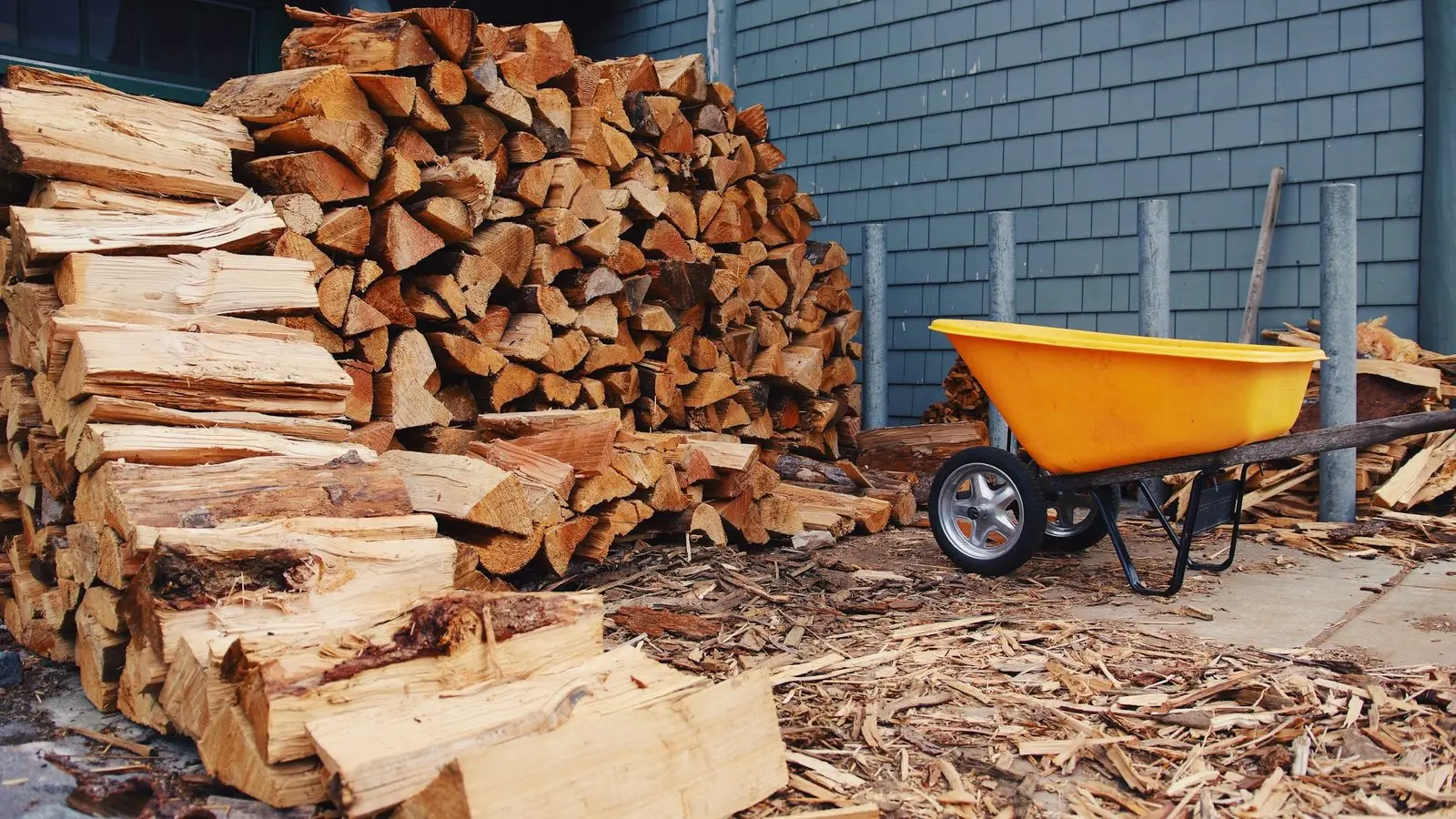
A metru ster, the unit firewood is sold by in Romania and Moldova, is a stacked cubic metre: logs stacked in a volume 1 m long, 1 m high and 1 m deep, including the gaps between the pieces. It is not a cubic metre of solid wood. For a clay garden chiminea, quantity matters less than quality: the wood must be dry, hardwood, and cut short enough to fit entirely inside the vessel.
In autumn, when people buy their wood for the winter, the same questions come up: how much is a ster really, how do you check it on delivery, and how much do you need? Here are the answers, with an eye on a garden fire rather than a stove that burns day and night.
What metru ster, cubic metre and loose load mean
- The metru ster (a stacked cubic metre, also called a stere) is the usual unit for firewood: logs laid in a stack, with the air gaps between them counted in the volume.
- A cubic metre of solid wood is the volume of wood with no gaps. It is used for logs and sawn timber. A ster holds less wood than a solid cubic metre, precisely because of the gaps.
- “Loose” or “thrown” firewood is wood tipped into a trailer in a heap, without stacking. The same amount takes up more space heaped than stacked, so a full trailer tells you very little about how much wood you are getting.
There is one more detail that changes the maths: a ster is usually measured on long logs, a metre in length. Once you cut them short and split them, the pieces pack more tightly and take up less room. So ask from the start whether the ster is measured before or after cutting, and whether the price includes cutting, splitting and delivery.
How to check a ster on delivery
- Stack the wood. You can only judge the volume on a stack. Lay the pieces tightly, parallel, not criss-crossed.
- Measure. The length of the stack multiplied by its height and by the length of the pieces gives the volume in stacked cubic metres, that is, in steri.
- Look at the ends. Dry wood has cracks at the ends, is lighter than it looks, and two pieces knocked together sound hollow. Wet wood is heavy, cold to the touch and sounds dull.
- Look for problems. Rotten or soft pieces, pieces covered in soil or mould, thin branches mixed in as “filler”, painted wood or old planks among the logs.
If the wood is freshly cut, don’t put it in the chiminea the same autumn. How to dry it and how to tell when it is ready to burn is covered in firewood: drying and storage.
Which woods to ask for, for a clay chiminea
For a clay garden chiminea, the best choice is well-seasoned hardwood: beech, hornbeam, oak, ash, acacia, plus fruit-tree wood (apple, cherry, sour cherry, plum), which smells lovely. These burn calmly, make good embers and throw few sparks. Acacia burns hot, so add it in small amounts.
Softwoods (fir, spruce, pine) are not forbidden, but they crackle, throw sparks and leave deposits. Keep a few thin pieces for lighting only. The full list, including what you should never burn, is in what to burn in a garden chiminea.
Log length: measure the vessel first
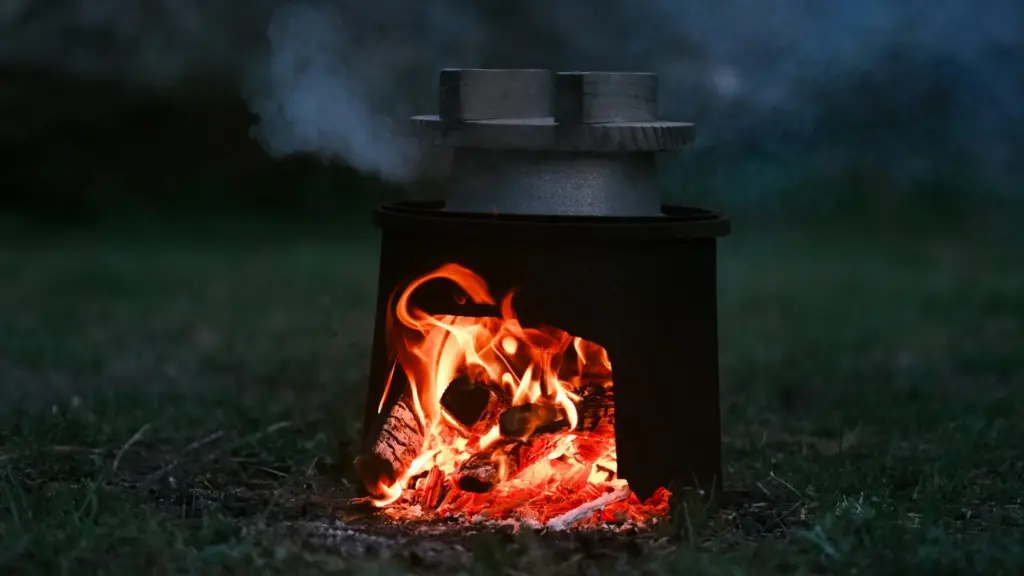
For a stove, the wood is cut to fit the firebox. A clay garden chiminea is no different: each piece should sit fully inside the belly of the vessel, without sticking out of the mouth. A piece that is too long forces you to build a big fire or leave one end hanging out, which is neither safe nor good for the ceramic.
- measure the fire opening and the depth of the vessel before you order the wood;
- ask for wood cut short and split thin; thin pieces burn cleaner in a small fire;
- if the wood arrives long, for the house, set aside a crate of short pieces for the garden.
How much wood you need for a season
A garden chiminea is not a stove. The fire in it stays small, inside the vessel, and is fed one or two pieces at a time. An evening uses far less than an open campfire. That is why, for the garden, you count in evenings, not in steri:
- count how many pieces you use on a typical evening, from lighting to embers;
- multiply by the number of evenings you realistically expect in a season;
- add a reserve for longer evenings and for kindling.
If you also have a stove in the house, the simplest thing is to buy the wood together and set aside the shorter, thinner pieces for the garden. If you only use the garden chiminea, a few evenings a month, a whole ster may be too much; bags of wood, or half a ster shared with a neighbour, make more sense here.
Where to keep the wood once you’ve bought it
In short: raised off the ground, covered on top only, with the sides open to the air, away from the house wall. Bring the wood for a fire evening from a covered spot, not out of the snow. All the details, from the rack to the woodshed, are in the guide on drying and storing firewood.
Our chiminea, in brief
Sparkle Stone chimineas are handmade from 100% natural, kiln-fired clay, withstand 500-600 °C, stand 87 cm tall on the triple stand and come with a protective lid. The wide bowl takes short pieces, added one or two at a time. See our clay garden chimineas or go straight to the model with red ornaments. The current price is on the product page.
How much is a metru ster of firewood?
A metru ster is the volume of a stack of logs 1 m x 1 m x 1 m, with the gaps between the pieces included. It holds less wood than a cubic metre of solid wood.
How many kilograms does a metru ster of firewood weigh?
There is no fixed weight. It depends on the species and above all on how wet the wood is: freshly cut wood weighs much more, but the water in it doesn’t heat anything, it just makes smoke. That’s why firewood is bought by volume and checked for dryness, not by weight.
Is it worth buying bagged firewood for a garden chiminea?
For a few evenings a month, yes: bags or nets of dry, short-cut wood are convenient and need no storage space. For frequent use, or if you also have a stove, buying by the ster works out better.
When is the best time to buy firewood?
Ideally a season ahead, so it has time to dry. If you buy it in autumn for the same winter, ask for seasoned wood and check it on delivery; wet wood is no good for a clay chiminea.