Garden stove or clay chiminea: which should you choose?
A garden stove is made first and foremost for cooking: it has a hotplate, sometimes an oven too, and you use it with a pot, a cauldron or a frying pan. A clay chiminea, or garden fireplace, is made for warmth and atmosphere: you see the fire through its wide mouth, the heat flows out towards the people sitting in front of it, and cooking is limited to simple things over the embers, on a stick or in foil. The choice comes down to what you do most often outdoors: do you cook for the family, or sit by the fire in the evening?
Both burn wood and both have a chimney, which is why people mix them up. Below we compare them point by point, honestly, including where the stove wins.
What exactly is a garden stove?
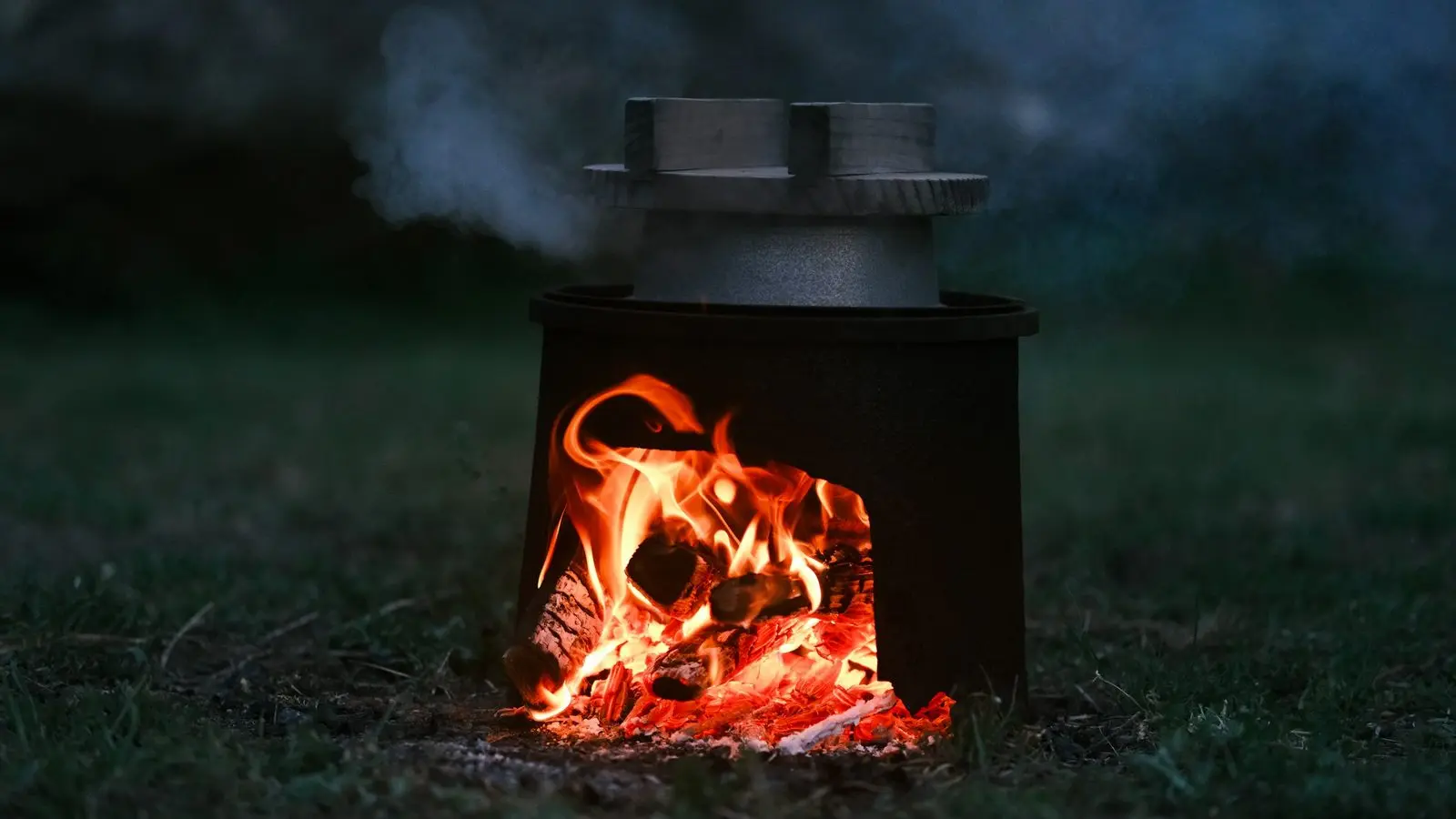
The name covers several things, but the idea is the same: a closed firebox with a metal hotplate on top and a flue for the smoke. The most common types are:
- Metal stoves, square or round, with a hotplate and sometimes an oven, set on a concrete base or on legs.
- Built brick stoves, part of a summer kitchen, with a hotplate, an oven and sometimes a grill.
- Clay stoves with a hotplate, the traditional version, built on the spot.
On them people make soups, stews, jams and zacuscă (the Romanian vegetable spread), boil water and keep food warm. They are cooking tools, and the fire is mostly hidden inside the box.
What is a clay chiminea?
A fired-clay vessel with a wide belly, a fire opening at the front and a vertical chimney, also known as a chimenea or Mexican-style fireplace. The fire is built on a layer of sand in the bowl at the bottom and you see it through the mouth. The clay soaks up the heat and gives it back slowly, while the chimney draws the smoke upwards. It has no hotplate and is not designed as a cooking hearth. More on how it differs from an open fire is in fire pit or clay chiminea.
Cooking: the stove wins here
If you want to make zacuscă in the autumn, soup in a cauldron or doughnuts for the grandchildren, you need a hotplate. A garden stove is the right choice, no question.
On a clay chiminea you can cook simply, over the embers: skewers, little sausages or marshmallows on a stick, potatoes and vegetables in foil placed next to the embers, toast, chestnuts. What you don’t do is put a heavy grill or a large pot over the mouth or on the chimney: that overloads the ceramic.
Warmth and atmosphere: the chiminea wins here
In a stove the fire stays shut in the box, and the heat collects mainly in the hotplate. It warms a summer kitchen well, but it doesn’t bring people together around it. With a clay chiminea the fire is in full view, and the heat flows out through the mouth towards the people sitting in a semicircle in front of it. The hot clay keeps radiating steadily even after the flames die down. For a long evening outside with friends, that is the difference that matters.
Location and installation
- A built stove is a construction: foundation, bricks, flue, usually under a summer-kitchen roof with the flue running out above it. It stays where it was built.
- A metal stove is heavy and usually set up once, on a level base, with the flue fitted.
- A clay chiminea needs no construction: put the stand on concrete slabs, stone or brick, set the vessel on top and it’s ready. It needs open sky above the chimney and 2-3 m from walls and furniture, so it does not go under a roof.
Moving it
Our chiminea is 87 cm tall with its stand and weighs between 17.2 and 19.9 kg. You can move it on your own, when cold, lifted by the body and not by the chimney: onto the terrace in summer, into the garage in winter. A built stove doesn’t move at all, and a metal one moves with difficulty.
Maintenance
A metal stove rusts if it stands in the rain and needs a coat of heat-resistant paint every so often; a built one needs its flue swept and its joints checked. A clay chiminea doesn’t rust, but it asks for three things: curing at the start, no water on the hot vessel, and a dry shelter in winter, because water that freezes in the clay can open cracks. What that means through the year is in caring for a clay garden chiminea.
And what about a “clay stove”?
Some people search for “clay stove” and are thinking of the traditional stove with a hotplate, in the house or the summer kitchen. That is a masonry construction built on the spot. Our clay chiminea is something else: an outdoor piece, handmade and kiln-fired, that is never used indoors, on an enclosed terrace or under a roof.
In short: which to choose
- You often cook outdoors, for lots of people, with pots and a cauldron: a garden stove with a hotplate.
- You want a fire in view, warmth in front of you and long evenings on the terrace: a clay chiminea.
- You have a summer kitchen and a terrace: both are worth it, each in its own place.
If you have decided on a fire you can see, take a look at our clay garden chimineas, with red ornaments or with blue ornaments: between 570 and 850 lei (RON), VAT included, with the stand and lid included and free delivery within Romania.
Can I cook on a clay chiminea?
Only simple things, over the embers: skewers, marshmallows on a stick, potatoes and vegetables in foil. For a pot, cauldron or frying pan you need a stove with a hotplate.
What is a clay garden stove?
Usually a traditional stove with a hotplate, built on the spot. It is different from a clay chiminea, which is a movable piece without a hotplate, made for an open-view fire.
Which one heats better?
For people sitting outside in front of the fire, the clay chiminea: the heat flows out through the mouth and the clay radiates steadily. A stove mainly heats the hotplate and the space around it.
Can a garden stove be moved?
A built one, no. A metal one, with difficulty. A clay chiminea, yes: you move it when cold, lifted by the body, not by the chimney.