Smoke and the neighbours: how to have a garden fire without bothering them
Smoke that drifts over to the neighbours almost always comes from the same four things: wet or unsuitable wood, a fire that is too big, a fire left to smoulder at the end, and a spot chosen without checking where the wind blows and where the windows are. You can control every one of them. With dry wood, a moderate fire, a clay chiminea placed with some thought and a quick word over the fence, an evening by the fire in your garden stays pleasant for you and for the people next door.
This guide is written for whoever lights the fire. At the end there are a few lines for the person on the other side of the fence, who is searching for “smoke from neighbours” because it is getting into their house.
Where does the bothersome smoke come from?
Every wood fire makes smoke, and anyone who tells you otherwise is not being straight with you. The difference is between thin smoke that rises and disperses and thick, yellowish-grey smoke that creeps along the ground. The second kind nearly always has a specific cause:
- Wet or freshly cut wood. The water in it has to come out before the wood can burn, so the fire smoulders.
- Anything that isn’t wood: leaves, green branches, grass, cardboard, rubbish, painted or treated timber.
- Too much wood at once. The fire is smothered, and the logs on top smoke until they catch.
- The end of the evening. A fire you leave to die down slowly, with big pieces still in it, smoulders for hours.
The wood: half the solution
Dry hardwood makes the least smoke: beech, hornbeam, oak, acacia, fruit-tree wood. Softwoods crackle and smoke more, so use them only as kindling to get the fire going. Good wood is light, has cracks at the ends and sounds hollow when you knock two pieces together. How to dry it and where to keep it is covered in firewood: drying and storage, and the full list of fuels is in what to burn in a garden chiminea.
The spot: watch the wind and the windows
Before you settle on a place for the chiminea, spend an evening in the garden and watch which way the wind carries smoke from someone’s barbecue or a chimney. Then:
- set the chiminea with its back to the direction the wind usually blows from;
- choose a spot from which the prevailing wind does not carry smoke towards the neighbours’ windows, terrace or washing;
- keep 2-3 m from the house, fence and furniture, with open sky above the chimney.
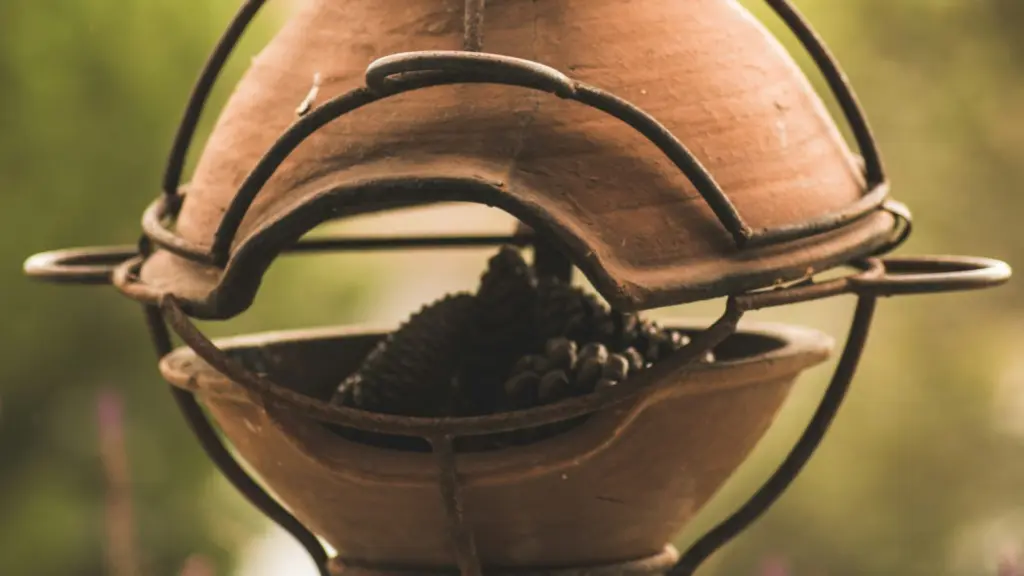
A clay chiminea helps here: the fire burns enclosed, and the chimney draws the smoke upwards instead of spreading it at eye level like an open fire.
The fire: small, lively, lit from the top
- Light it from the top down: big logs at the bottom, kindling and paper on top. The fire starts clean and makes little smoke at the beginning.
- Add logs one or two at a time, as they burn down, not a whole load.
- Let air in through the mouth of the chiminea; don’t block it and don’t cram the logs together.
- Towards the end, stop adding big logs. Let the fire burn down to ash while it is still lively.
The timing: when not to light it
There are evenings when smoke stays low however well you build the fire: cold, damp, still air, fog, or wind blowing straight at the neighbour’s house. On those evenings the fire can wait. Likewise, if you see washing hung out to dry over the fence, or windows open right in the path of the smoke, leaving it for another evening costs you nothing.
During dry spells, temporary bans on outdoor fires may apply. The rules differ from one locality to another, so if you are not sure, ask at your local town hall.
Talk to your neighbours
The simplest solution is also the rarest: a word over the fence before your first evening with a fire. Tell them when you plan to light it and ask them to let you know if the smoke bothers them. Most people are far more tolerant of a neighbour who asks than of one who doesn’t. And sometimes an invitation to join you by the fire settles everything.
If you are the one bothered
If the neighbours’ smoke is getting into your home, start with a calm conversation too: say what bothers you and when, for example “in the evenings after 8 pm, the smoke comes into our bedroom”. Many people don’t know that wet wood or leaves produce thick smoke, and a few tips from this guide can make a big difference. In the meantime, close the windows on the smoky side while the fire is burning. If the problem continues and is serious, the local rules and the authorities in your area are the ones who can say what is allowed.
Our chiminea, in brief
Sparkle Stone chimineas are handmade from 100% natural clay, stand 87 cm tall on the triple stand and have a chimney that draws the smoke upwards. See our clay garden chimineas or go straight to the model with blue ornaments.
Why does my garden chiminea smoke?
Most often because of wet wood, too many logs added at once, or a fire left to smoulder. Dry wood and a moderate fire cut the smoke a lot.
What can I do if my neighbours’ smoke bothers me?
Start with a calm, specific conversation: when and where it bothers you. If the problem continues, ask at your town hall which rules apply in your locality.
Is there a smokeless wood-burning chiminea?
No. Every wood fire makes smoke. A chiminea with a chimney draws it upwards, and dry wood makes it much thinner.
Can I burn leaves in a chiminea?
It’s not a good idea: they make a lot of smoke, burn badly and annoy the neighbours. Dry twigs, broken into small pieces, make good kindling, though.