Wood-Fired Pizza Oven or Clay Garden Chiminea: What You Can Do with Each
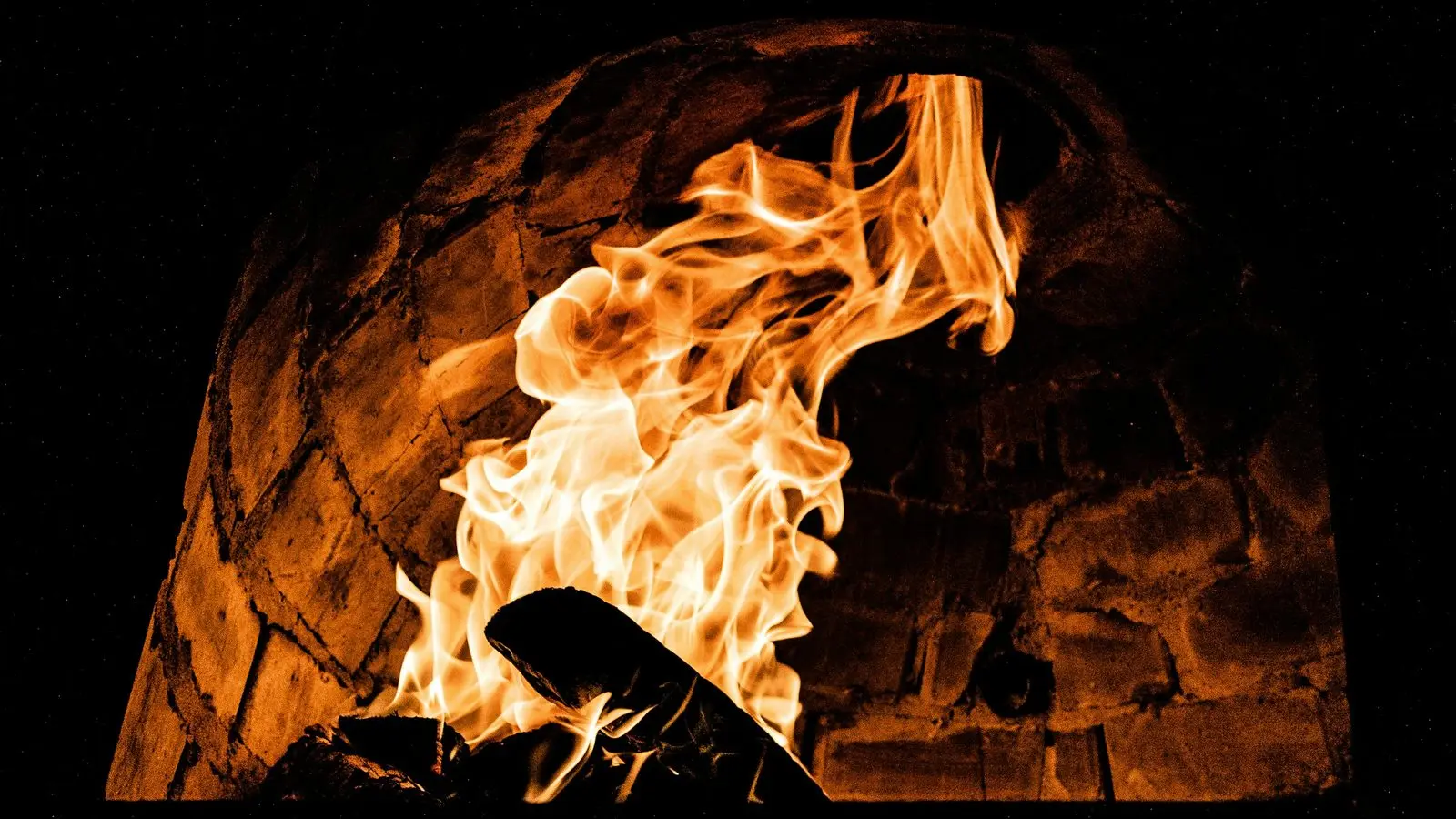
A wood-fired pizza oven is built to cook: it has a flat floor of stone or brick and a dome that gathers the heat and sends it back down over the pizza. A clay garden chiminea is built to warm the people in front of it: the fire sits on a layer of sand in a round bowl, and the chimney carries the smoke upwards. You can’t bake pizza in a clay chiminea. You can, however, make pizza in your kitchen oven or in a garden oven and eat it by the fire, and use the chiminea’s embers to cook simple things.
The question comes up often, because both are “clay” or “ceramic” and both burn wood. They are alike in material, not in function. Below: how each one works, why you shouldn’t mix them up, and how to have both.
How a pizza oven works
- The flat floor. The pizza sits directly on hot stone or firebrick, which bakes the base from below.
- The low dome. It gathers the heat of the fire and sends it back down from above, over the pizza.
- The fire to one side. The logs burn against the wall, while the pizza bakes next to them and is turned with the peel.
- High temperature. A pizza oven floor can reach 400-450 °C, and a thin pizza bakes in a few minutes.
How a clay garden chiminea works
- The round bowl, with sand. The fire is built on a layer of sand about 10 cm deep, not on a flat floor.
- The mouth. Air and logs go in here, and most of the heat comes out here too, towards the people.
- The chimney. It draws the smoke upwards. It doesn’t gather heat over food the way a dome does.
- A moderate fire. Fired clay withstands 500-600 °C, but what damages it is sudden heating and too much wood at once, one of the usual causes of cracks.
Why you don’t bake pizza in a clay chiminea
- There’s nothing to put it on. The bottom is a layer of sand and ash, not a clean, flat floor.
- It doesn’t bake from above. Without a dome, the base would burn underneath and the top would stay raw.
- It would need too big a fire. The problem isn’t the clay’s maximum temperature but the fire: to try to reach the heat of a pizza oven, you would load lots of wood at once and get it going fast, which is exactly what clay must be spared.
- Weight on the bowl. Pizza stones, cast-iron trays, heavy pots and pans don’t go on the mouth or the chimney: weight plus heat concentrated in one spot puts strain on the ceramic.
You can buy metal outdoor fireplaces that are also designed for cooking, with grills or pizza accessories. That’s a different category. The differences between clay and metal are in clay or cast-iron garden chiminea.
What about a garden stove?
If you want to cook outdoors often, with pots and pans, a garden stove with a hotplate is closer to what you’re after than a pizza oven. We compared it with the clay chiminea in garden stove or clay chiminea.
What you can still cook over the chiminea’s embers
Simple things, over embers, not over high flames: scored chestnuts, potatoes in foil set next to the embers, bread on a stick, small sausages or marshmallows on long skewers. Something close to pizza: bread dough wrapped around a thick stick and baked over the embers, then filled with cheese or whatever you like. Chestnuts, potatoes and marshmallows are explained step by step in roast chestnuts and potatoes in the embers.
A pizza evening by the fire
- Light the fire in good time. The chiminea should be warm and the fire calm when people arrive.
- Bake the pizza in the kitchen or in your garden oven, if you have one, and bring it out sliced, on a wooden board.
- The table stands apart. Pizza and plates go on a table a few steps away, not on the chiminea and not next to the mouth.
- Dessert over the embers. Marshmallows or chestnuts, towards the end of the evening, once the fire has died down.
The rest of the planning, from chairs to lighting, is in a garden party by the fire.
If you want both in the garden
You can, with a place for each: the pizza oven is heavy and fixed, usually on a built base; the garden chiminea can be moved when cold, and needs concrete slabs, stone or brick underneath and 2-3 m of clearance from walls and wooden fences. Don’t put them side by side, so you don’t end up with two fires in the same corner. The right wood is the same for both: dry hardwood (see what to burn in your garden chiminea).
Our chiminea, in brief
Sparkle Stone chimineas are handmade from 100% natural, kiln-fired clay, withstand 500-600 °C, stand 87 cm tall on the tripod stand and come with a protective lid. They are designed for warmth and atmosphere, with simple cooking over the embers, not as an oven or a barbecue. See our clay garden chimineas. The current price is on the product page.
Can I bake pizza in a clay garden chiminea?
No. A clay chiminea has neither a flat floor nor a dome to bake the pizza from above, and the big fire it would need puts strain on the clay. For pizza, you need an oven.
Can I put a pizza stone on a garden chiminea?
No. Pizza stones, trays and heavy pots don’t go on the mouth or the chimney: the weight and the heat concentrated in one spot put the ceramic under strain.
Which is better for the garden, a pizza oven or a garden chiminea?
It depends what you want: an oven if you want to cook often, a garden chiminea if you want warmth and evenings by the fire. If you have the space, both can live in the garden, each in its own corner.
What can I still cook on a clay garden chiminea?
Simple things, over the embers: chestnuts, potatoes in foil, bread on a stick, small sausages and marshmallows on long skewers. No food that drips a lot of fat, and no pots on the bowl.