The Leonids 2026: November’s Meteor Shower, Watched from the Garden by the Fire
The Leonids, November’s meteor shower, peak in 2026 on the night of 17 to 18 November. The Moon is at first quarter on the 17th and sets around midnight, so the hours after midnight, until dawn, are the best. You can see them with the naked eye from your own garden, too, if you switch off the lights, sit with your back to the house and let the fire in the chiminea burn low, off to one side, or die down before you start watching.
An autumn evening by the fire can stretch into an extra hour under the open sky. Below: what the Leonids are, when and where to look, how to reconcile the firelight with a dark sky, and how to stay warm on a November night.
What the Leonids are
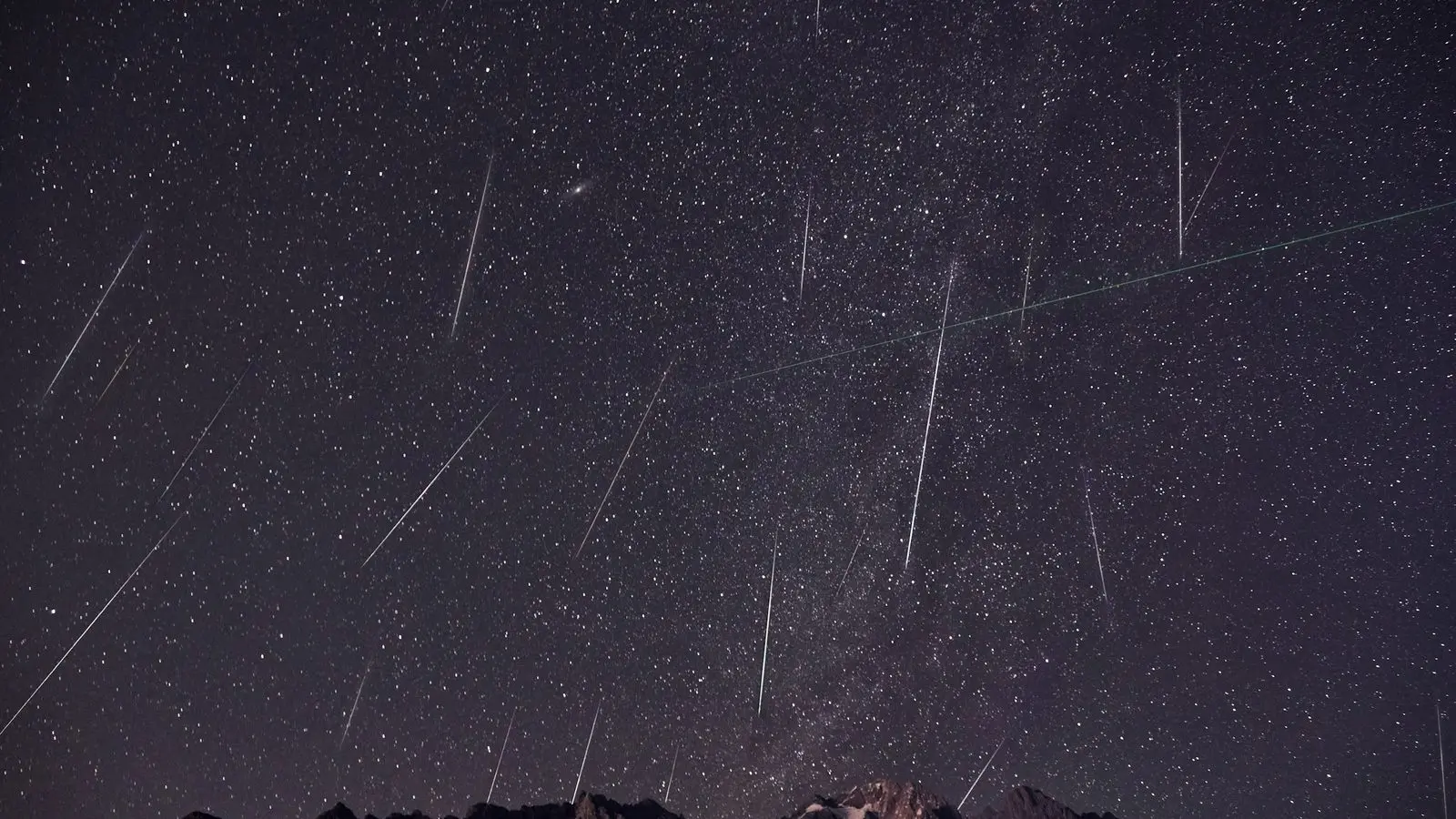
The Leonids are a meteor shower that returns every year in mid-November. The Earth passes through the dust left behind by comet 55P/Tempel-Tuttle, and the tiny specks of dust burn up in the atmosphere: these are the “shooting stars”. The name comes from the constellation Leo, the Lion, from whose direction they seem to start. In 2026 the shower is active, at low intensity, from roughly 6 to 30 November, and the peak falls on the night of 17 to 18 November.
So you know what to expect: in ordinary years the Leonids are a modest shower. Under a completely dark sky, with no Moon, you’ll see at most 10-15 meteors an hour; from a garden with lights around, fewer. No unusually high activity is expected for 2026. It’s still worth it: some meteors are very bright and leave a trail that stays visible for a moment.
When and where to look
- The night: 17 to 18 November, with the nights either side as a back-up (16-17 and 18-19) if it’s cloudy.
- The time: after midnight. Leo rises late, and the first-quarter Moon sets around midnight, so the sky is darker towards morning.
- The direction: you don’t need to stare at Leo. Meteors appear all over the sky; look wide, taking in as much sky as possible at once, facing the darkest part of the garden.
- The weather: check the cloud forecast for that evening. A clear sky matters more than where you are.
Fire and sky: how to have both
Your eyes need 20-30 minutes of darkness to see faint stars, and a glance at the flames or at your phone screen undoes part of that adaptation. Firelight is beautiful, but it is light. So:
- In the evening, by the fire. Light the fire early, sit by it, have something hot to drink, and around midnight stop adding wood.
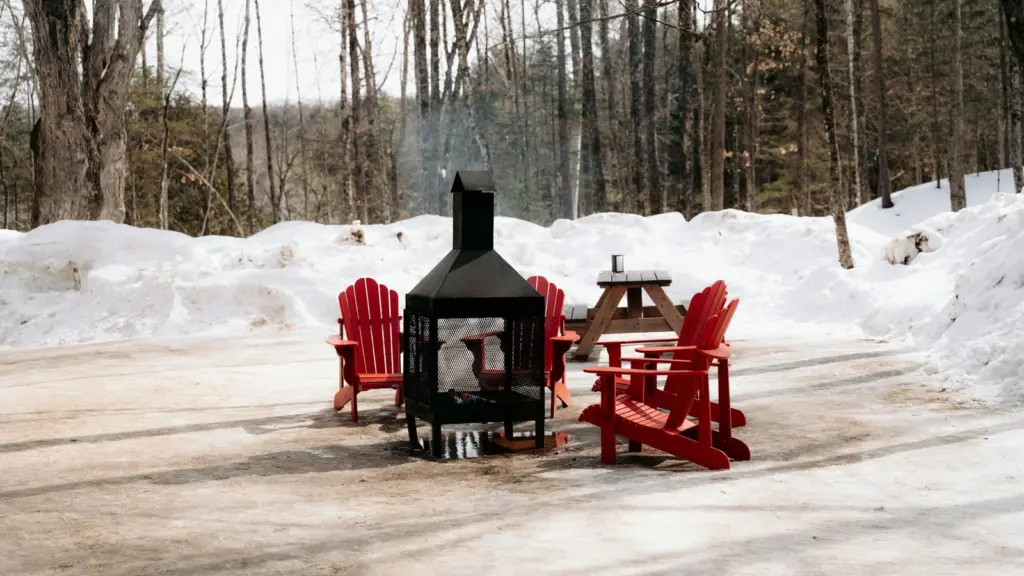
- While you watch, the fire is low or out. A bed of embers in the chiminea gives warmth and very little light. It also helps to have the mouth facing away from the patch of sky you’re watching (only turn the chiminea when it’s cold, before lighting).
- Chairs further away, backs to the fire. For the stars, sit a few metres from the chiminea, facing the dark sky.
- Switch off the lights in the garden and on the terrace. To find your way, use a red-light torch or a phone with the brightness turned right down.
- Never leave the fire unattended. If the fire is still burning, someone stays next to it. A sun lounger stretched out on the grass, eyes on the sky, is not a spot from which you can keep watch over a fire. The rules are in garden chiminea safety.
How to stay warm on a November night
After midnight it’s much colder than in the evening, and when you sit still you cool down quickly. Dress in layers, with wool on top, plus a hat, gloves and lined boots. Use a lounger or an insulating mat with a thick blanket underneath you, not directly on the wet grass, and another blanket on top. Hot drinks in a flask. All the details, from your feet to the wind, are in how to stay warm by an outdoor fire.
What to take outside
- sun loungers or an insulating mat: you can look up without getting a stiff neck;
- wool blankets and cushions;
- a flask of tea and something to nibble;
- a red-light torch;
- a sky map on your phone, with night mode on, if you want to find Leo.
You don’t need a telescope or binoculars: meteors move too fast and across too much of the sky. The naked eye is the best instrument.
With children
For children, the hours after midnight are late. One option: in the evening, by the fire, tell them what shooting stars are, go out under the sky for a few minutes before bed (you might catch the odd meteor even then), and the adults stay up for the later hours. Ideas for fireside stories are in fireside games and stories.
The end of the night
Before you go in, check the chiminea: add no more wood and let it go out on its own, with the embers in the bowl. No water on hot clay. Take the ash out the next day, once it’s completely cold; how is explained in ash from your garden chiminea. If clouds made you miss the Leonids, the Geminids arrive in mid-December, and they are usually richer.
Our chiminea, in brief
Sparkle Stone chimineas are handmade from 100% natural, kiln-fired clay, withstand 500-600 °C, stand 87 cm tall on the tripod stand and come with a protective lid. The fire is enclosed in the bowl and the light comes out mainly through the mouth, so if you turn the chiminea in advance, while it’s cold, with the mouth facing elsewhere, it casts little light on the sky you’re watching. See our clay garden chimineas. The current price is on the product page.
When are the Leonids in 2026?
The shower is active from roughly 6 to 30 November, peaking on the night of 17 to 18 November 2026. The nights around the peak are a good back-up if it’s cloudy.
What time are the Leonids best seen?
After midnight, until dawn. Leo rises late, and in 2026 the first-quarter Moon sets around midnight.
Can I watch shooting stars next to a lit fire?
Firelight hides the faint stars. Let the fire die down to embers, sit a few metres away with your back to it, and switch off the garden lights. Someone still keeps an eye on the fire while it’s burning.
How many shooting stars can you see during the Leonids?
In ordinary years, under a completely dark sky, at most 10-15 an hour. From a garden with lights around you’ll see fewer, but the bright ones are visible from there too.