Natural Fire Starters for a Clay Chiminea: What to Use and What to Make at Home
For a clay garden chiminea, the best fire starter is also the simplest: thin, dry kindling, birch bark, a dry pine cone or a natural firelighter made of wood shavings and wax. You can make one at home from a cardboard egg box, wood shavings or sawdust and leftover candle wax. What you never use: petrol, methylated spirit or lighter fluid, which flare up suddenly and put the clay under strain.
A fire starter has one job: to burn steadily for a few minutes, long enough for the kindling to catch. With the top-down method, which we recommend for a clay chiminea, it sits at the top of the stack, so you need very little: one or two pieces are plenty. The lighting steps are in how to light a fire in your garden chiminea; this article is about what goes on top of the stack.
Natural fire starters you already have
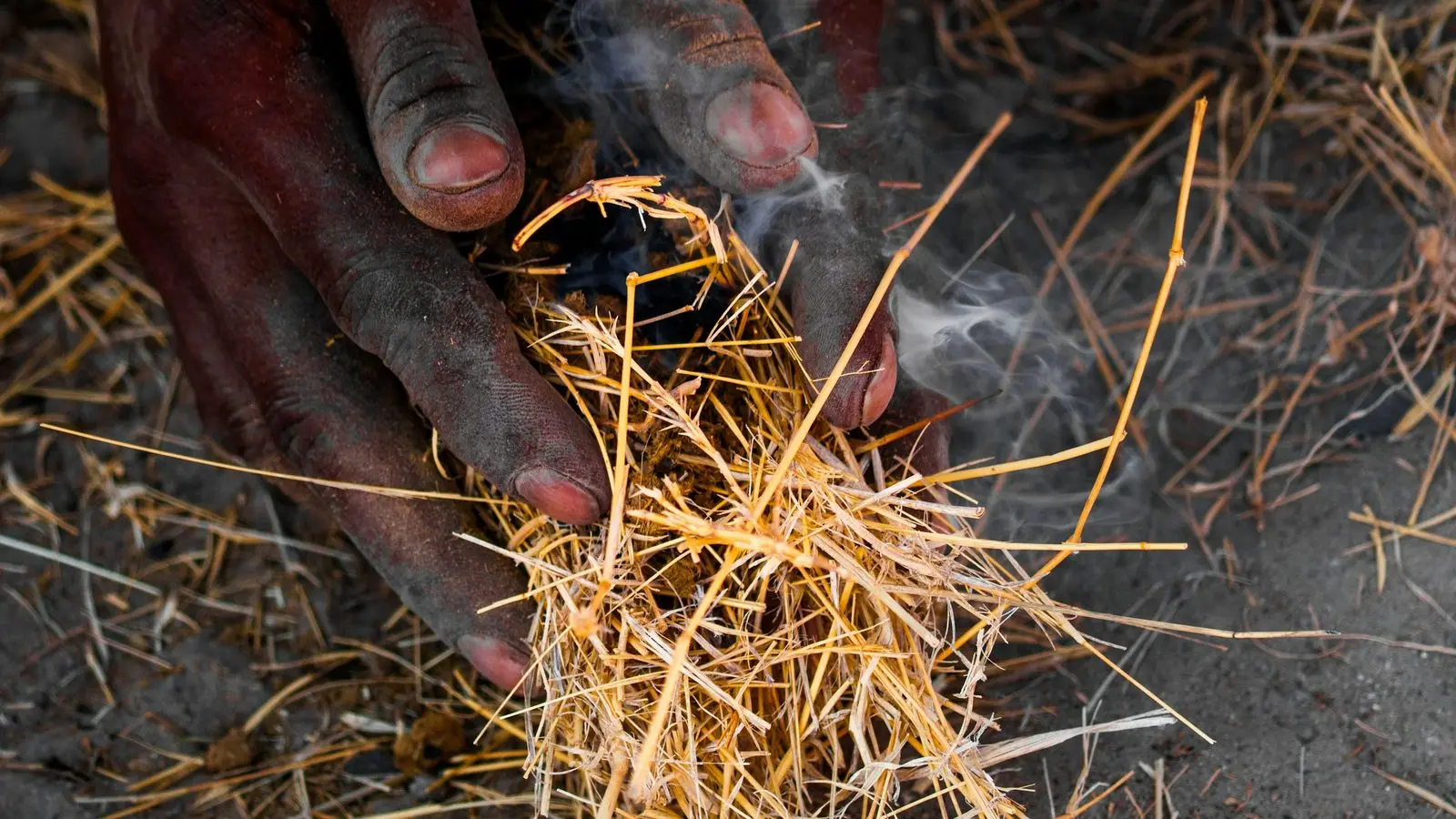
- Thin, dry kindling. Pencil-thick sticks snapped from fallen, dry branches or split from a log. Softwoods (fir, spruce, pine) are very good here, because they catch quickly.
- Birch bark. It contains natural oils and burns well even when slightly damp. Take it from your firewood or from fallen branches, not from living trees.
- Dry pine or spruce cones. One or two, for lighting. The rule is the same as for all resinous wood: only to start the fire, not as fuel for the whole evening, because they crackle and throw sparks.
- Paper, a little. A sheet or two of newspaper, loosely scrunched. Lots of paper rises up the chimney still burning. No glossy, coloured or foil-lined paper.
- Plain cardboard, torn into small pieces, with no tape and no glossy print, in small amounts.
Homemade fire starters with wax
Wax makes something that would burn for a few seconds burn for a few minutes. The basic recipe is the same whatever the filling:
- The egg box and the filling. Fill each cup of a cardboard egg box with wood shavings, dry sawdust, small wood chips or birch bark.
- The wax. Leftover candles (without the metal wick holder), beeswax or soy wax. Melt it in a bain-marie: a small pot set inside a larger pot of water, over a low heat.
- Pouring. Pour the wax over the filling, enough to soak it, not drown it, and let everything harden.
- Cutting. Tear the egg box into single cups. Each piece is one fire starter.
Variations: dry pine cones dipped in wax and left on a sheet of paper to set; a handful of wood shavings tied with cotton string and dipped in wax; corks soaked in wax.
Wax safety: only ever melt wax in a bain-marie, never directly over a flame or on the hob, and never leave it unattended, because overheated wax can catch fire. If it does, cover the pot with a lid and turn off the heat; do not pour water on it. Keep children away from the cooker while you work.
Tumble dryer lint: yes or no?
Lint from the dryer filter turns up in lots of recipes, and it burns very well. The problem is what it’s made of: today’s clothes contain a lot of polyester and other synthetic fibres, and their lint burns like plastic, with foul-smelling smoke. If you want to use it, keep only lint from 100% cotton loads. Simpler still: wood shavings, sawdust or birch bark.
Shop-bought fire starters
In the shops you’ll find two kinds. Natural ones, made of wood shavings and wax, suit a clay chiminea. Firelighter cubes and tablets are often petroleum-based: they light reliably, but they can leave a smell, and if you want to cook something over the embers, it’s better to avoid them. Read the label. As with charcoal and briquettes, products with additives for quick lighting are best avoided (see what to burn in your garden chiminea).
What you never use
- petrol, methylated spirit, paraffin, lighter fluid or any other accelerant: they flare up suddenly with a big flame, which is exactly the sudden heating clay cannot take;
- plastic, polystyrene, foil-lined packaging, drinks cans;
- painted, varnished or treated wood, chipboard, MDF, old furniture;
- green branches and leaves: they make lots of smoke and burn badly.
How to use it in a clay chiminea
- On the layer of sand, place two or three small split logs, a finger’s width apart.
- On top, thin kindling laid crosswise, in two layers.
- At the very top, the fire starter: one or two egg-box cups, or a handful of birch bark.
- Light it through the mouth and let the fire burn down on its own. Never add new fire starters to a fire that is already burning.
With dry wood, a single fire starter is enough. If the fire won’t catch even with two, the cause is almost always damp wood; how to dry it and how to recognise it is covered in firewood: drying and storage.
Where to keep them
In a closed tin or cardboard box, somewhere dry and cool, away from the stove, the cooker and the chiminea. Keep only what you need for that evening next to the lit fire, and don’t let children play with them.
Our chiminea, in brief
Sparkle Stone chimineas are handmade from 100% natural, kiln-fired clay, withstand 500-600 °C, stand 87 cm tall on the tripod stand and come with a protective lid. The fire is built on the layer of sand at the bottom of the bowl, and the wide mouth gives you room to build the stack and light it from the top. See our clay garden chimineas or go straight to the model with red ornaments. The current price is on the product page.
What is a good fire starter for a clay chiminea?
A natural one: dry kindling, birch bark, a dry pine cone or a wood-shaving-and-wax starter. They burn steadily for a few minutes, without the sudden flare of lighter fluids.
How do you make fire starters at home?
Fill the cups of a cardboard egg box with wood shavings or dry sawdust, pour wax melted in a bain-marie over them, let it harden and tear the box into pieces.
Can I use firelighter cubes in a garden chiminea?
They will light the fire, but many are petroleum-based and can leave a smell. For a clay chiminea, especially if you want to cook something over the embers, choose natural fire starters.
Can I light the fire with methylated spirit or lighter fluid?
No. Accelerants flare up suddenly with a big flame, and sudden heating is one of the causes of cracks in clay. The flames can also come out through the mouth.