Garden fireplace safety: children, pets, wind and the end of the evening
A clay garden fireplace keeps the fire enclosed: the wide bowl holds the embers and sparks inside, and the chimney draws the smoke upwards. But it is still a fire, and the outside of the bowl gets hot enough to burn skin. There is just one basic rule of chiminea safety: an adult watches over it from lighting to the last ember. The rest are simple habits you can learn in a single evening.
This guide doesn’t repeat the placement rules; it deals with the evening itself: what to check beforehand, how to keep children and pets at a distance, what to do about the wind, what to keep to hand and how to finish the fire.
Before you light: the two-minute check
- The spot. The chiminea stands on concrete, stone or brick paving, 2-3 m from walls, wooden fences and upholstered furniture, with open sky above the chimney. If it is your first time, the full rules are in where to place a chiminea.
- The stand. It sits level, without wobbling, and the bowl rests securely on it.
- The bowl. It is dry and has no cracks that go right through the wall. Fine, surface crazing is normal in ceramics used with fire; a crack you can see light through is not.
- The lid. It is off the chimney. It goes on only when the chiminea is cold and unused.
- The weather. No strong gusts and, in dry spells, no fire bans in your area.
Children near the fire
Children aren’t wary of a pretty, painted pot in the way they would be of open flames. That is exactly why they need a clear rule, given before you light the fire:
- A boundary they can see. For example, the edge of the paving: up to there is fine, no closer. A concrete boundary is easier to respect than “don’t go near it”.
- They stay seated. Children sit on chairs or a bench, they don’t run around the fire.
- They don’t touch anything. Not the bowl, not the chimney, not the metal stand, neither during the fire nor the next morning, until an adult has checked.
- They don’t put anything on the fire. The logs are added by the adult in charge of the fire.
Bread or marshmallows on a stick are fine, but with an adult beside them and long sticks, so that hands stay well away from the mouth.
Dogs and cats
Animals don’t understand that the bowl is hot. A dog wagging its tail next to the stand or a cat jumping onto the lid left on the ground can knock something over or get burnt. Keep the dog on a lead or in another part of the garden while the fire is burning, especially in the first few evenings. Cats look for warm spots, so the next day check that none has curled up next to the still-warm bowl.
The wind
A clay chiminea behaves well in moderate wind, because the fire is enclosed. In strong gusts, though, sparks can still be drawn up the chimney, and smoke can blow back towards the chairs. A few rules:
- place it with its back to the prevailing wind;
- in a strong wind, keep the fire small or postpone the evening;
- don’t leave anything light lying around: bags, paper napkins, piles of dry leaves.
Clothes, blankets and chairs
Wool blankets and cushions make the evening last longer, but textiles catch fire easily. Keep the chairs facing the mouth, at a distance where the heat is pleasant, not scorching. Don’t hang gloves or towels on the chiminea and don’t put glasses on its rim. Whoever tends the fire wears clothes without wide sleeves that could dangle towards the flames.
What to keep to hand
- thick, heat-resistant gloves;
- a small metal shovel for embers and ash;
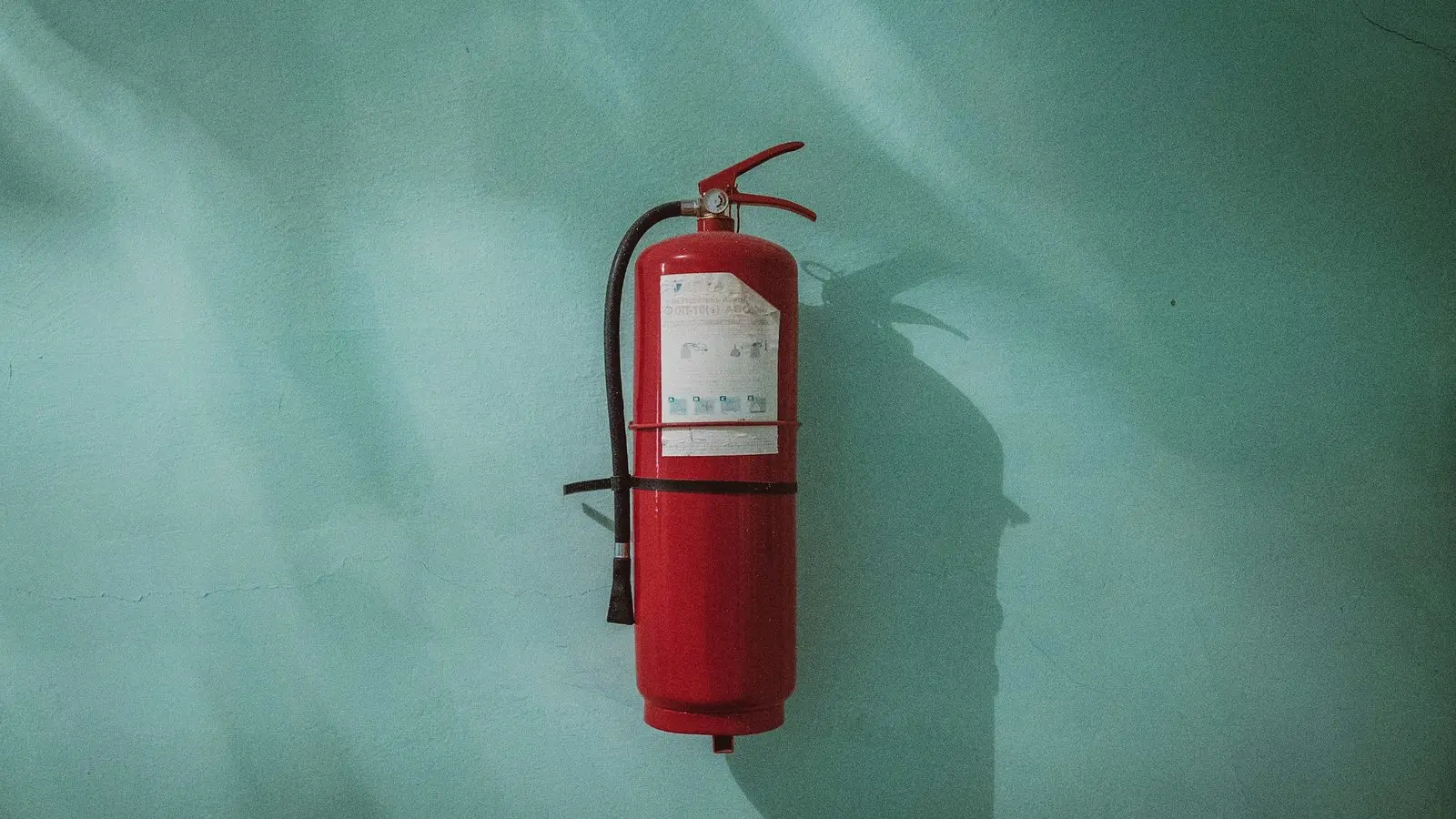
- a bucket of sand or dry soil and, ideally, a fire extinguisher, for an emergency outside the chiminea.
Water is for real emergencies, for example a spark landing on the deck or in the grass. It is never poured on the hot bowl: it suddenly cools part of the wall and can open up a crack. And if something serious happens, people always come before ceramics.
The end of the evening
- An hour or two before you go in, stop adding logs.
- Let the fire burn down to ash and small embers.
- Don’t leave while flames are still visible. Embers can stay hot for hours under the ash.
- Let the chiminea cool on its own, until the next day. Only then put the lid on and clear out the ash, into a metal container.
What to do with the cold ash and how to use it in the garden is in ash from a garden fireplace.
What you never do
- never light the fire with petrol, methylated spirit or any other lighter fluid;
- never burn rubbish, plastic, or painted or treated wood;
- never use the chiminea on an enclosed patio, under a roof or in a garage;
- never move it while it is hot.
Our chiminea in brief
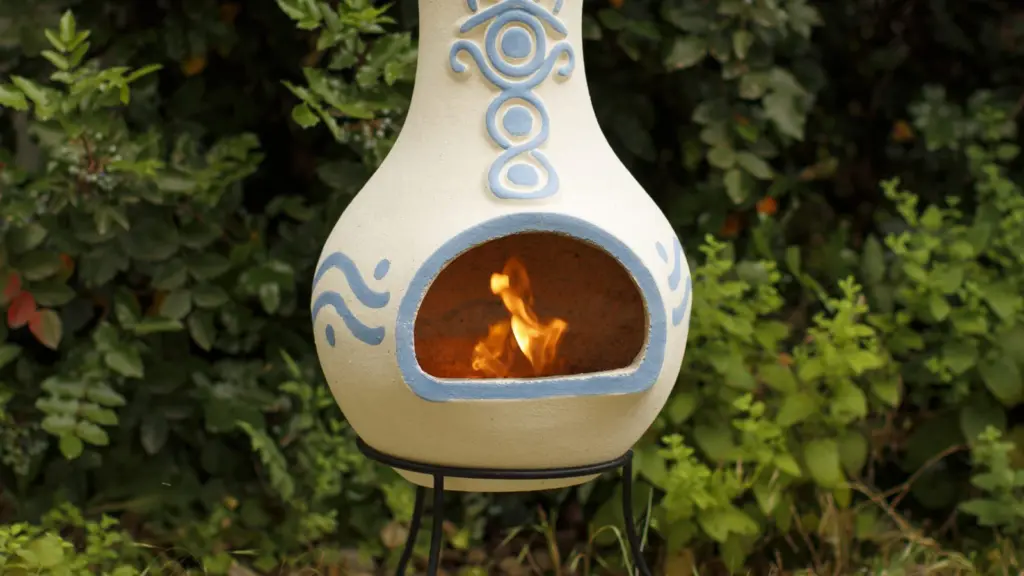
Sparkle Stone chimineas are handmade from 100% natural, kiln-fired clay, withstand 500-600 °C, stand 87 cm tall with the three-legged stand and come with a protective lid. The wide bowl keeps sparks inside. See our clay garden fireplaces or go straight to the model with blue ornaments.
Is a clay garden fireplace safe?
Yes, if it stands on a non-combustible base, 2-3 m from the house and furniture, with open sky above, and if the fire is supervised by an adult to the end. An enclosed fire is easier to control than an open one.
Can I leave the fire unattended if it is small?
No. Even a small fire can throw out a spark, and the embers stay hot long after the flames have gone. Someone stays with it until it has burnt down to ash.
What do I do if a spark lands on the deck or in the grass?
Put it out straight away with sand, soil or water from the bucket kept to hand. Water goes on the deck or the grass, never on the hot bowl.
Does the outside get hot?
Yes, hot enough to burn. Don’t touch the bowl, the chimney or the stand while the fire is burning and while it cools down, usually until the next day.